Aluminum Frame Tent Applications: Choosing by Project Type
Which aluminum frame tent fits your project? The answer depends on how the structure will be used, how long it will stay in place, and what site conditions it must resist. A temporary warehouse needs loading openings and a column-free interior; a sports venue needs wide span and flooring options; a large event or wedding needs quick assembly, fire-rated fabric, and weather protection. This guide walks through the main aluminum frame tent applications and the project decisions behind each one.
Shenzhen Shoulder Tent Co., Ltd. (Shoulder Tent) is a manufacturer of large prefabricated tent structures based in Shenzhen, China. Since 2009, the company has supplied aluminum-frame tents for warehousing, sports, weddings, events, exhibitions, and commercial spaces, with 80% of output exported to Europe, the Middle East, Africa, Southeast Asia, and South America.
What Makes Aluminum Frame Tent Selection Project-Specific?
During the research and evaluation stage, buyers often compare product brochures before defining the exact project brief. That order can lead to mismatched specifications. An aluminum frame tent is a modular system, but the project requirements determine which frame size, fabric grade, door configuration, and accessories should be selected.
Four project variables usually drive the specification:
- Duration: Is the tent temporary, semi-permanent, or intended for repeated relocation? This affects anchoring, foundation treatment, and fabric selection.
- Load exposure: Wind and snow loads determine the frame engineering and reinforcement required for the site.
- Access and layout: Warehouses need loading openings and clear interior space; sports and event venues need defined floor areas and entrance points.
- Comfort and compliance: Fire-rating, insulation, climate control, lighting, and staging depend on how people will use the space.
By defining these variables first, buyers can evaluate whether a tent structure is suitable for a warehouse project, a sports facility project, an event program, or a mixed-use commercial site.
Why Aluminum Frame Tent Demand Is Growing Across Project Types
The broader global tent market, including storage, sports, and event sectors, is projected to grow from USD 4.01 billion in 2025 to USD 6.07 billion by 2033, with a CAGR of 5–7%, according to industry reports from Shelter Structures. Separate analysis by Rethinking The Future estimates that the event tent market, which includes aluminum frame structures, will reach a valuation of over USD 3 billion by 2025, growing at a CAGR of 6.2%.
China plays a central role in this supply chain. Trade data from OEC shows that China exported approximately USD 5.55 billion in “Aluminium Structures” (HS 7610) in 2024, a category that covers modular tent frames.
Regulatory requirements also shape project planning. In the European market, EN 13782:2015 governs structural stability for mobile, temporary installed tents under wind and snow loads. In the United States, commercial event and industrial tents must meet NFPA 701, the standard for flame propagation of textiles and films. Buyers should confirm which standard applies to their project region before finalizing specifications.
Material life is another evaluation factor. Aluminum alloy frames typically last 15–20 years, while PVC-coated fabric covers generally last 5–8 years under standard outdoor conditions, based on industry sourcing data. This means frame quality has a direct impact on long-term project cost, especially for semi-permanent structures.
Aluminum Frame Tent as a Project Solution
Shoulder Tent’s aluminum frame tent product line covers wedding tent, event tent, sports tent, and warehouse tent configurations. The product is a modular assembly system that combines prefabricated aluminum profiles with fabric covers. It is designed to provide secure, weather-resistant, and movable large-scale marquee solutions for temporary or semi-permanent sites.
Core Specifications
- Models: S30-1, S32, S45-1, S45-2, S60-1
- Frame material: Aluminum alloy profile frame
- Cover material: Double-layer PVC-coated polyester tarpaulin
- Maximum wind load: 100–120 km/h
- Snow load: Up to 1.9 kN/m²
- Applicable industries: Warehousing & logistics, industrial manufacturing, agricultural storage, exhibition & events, sports venues, hospitality/resorts
Modular Assembly and Expansion
The structure operates in modular assembly mode, which means it can be installed and dismantled quickly. This is a key advantage for project schedules that require rapid deployment. The clear-span, column-free design keeps interior space open, while modular 3m/5m bay expansion allows length to be adjusted to the site and capacity requirements. This combination makes the same product family adaptable to small seasonal storage needs and large event venues.
Accessories and Special Requirements
Project fit often depends on accessories as much as the frame itself. Supporting equipment includes cassette flooring, sidewalls and doors, ventilation and insulation accessories, lighting, staging and carpets, and anchoring systems. Special requirements for larger or more demanding projects include fire-rating, strengthened wind/snow load designs, foundation and anchorage treatments, insulation and climate control, and custom doors or loading openings.
How to Match an Aluminum Frame Tent to Your Project: Step-by-Step
Step 1: Define Project Type and Duration
Determine whether the site is temporary, semi-permanent, or planned for long-term repeated use. Aluminum frame tents are used for storage/inventory expansion, temporary warehouses, exhibition venues, event back-of-house and equipment storage, sports venue covers, and temporary or large-scale events and weddings. The project type directly affects anchoring, fabric grade, and accessory selection.
Step 2: Evaluate Site Conditions and Load Requirements
Collect wind and snow load data for the installation location. Shoulder Tent’s aluminum frame tents are rated for maximum wind loads of 100–120 km/h and snow loads up to 1.9 kN/m². If the site has higher exposure, strengthened wind/snow load designs and foundation or anchorage treatments should be included in the project specification.
Step 3: Select Span, Length, and Bay Module
Choose the frame model and bay layout based on interior space needs. The clear-span, column-free design removes obstructions from the usable floor area, and modular 3m/5m bay expansion lets the project team extend the tent length in controlled increments.
Step 4: Specify Fabric, Fire Rating, and Climate Control
Confirm whether the project requires flame-retardant fabric, improved waterproofing, insulation, or climate control. The double-layer PVC-coated polyester tarpaulin is used for weather protection, while fire-rating and insulation options should be specified when required by local codes or the operating environment.
Step 5: Choose Doors, Flooring, Ventilation, and Anchoring
List the operational needs: custom doors or loading openings for warehouse access, cassette flooring for events and exhibitions, sidewalls for weather protection, ventilation and insulation accessories for worker comfort, and anchoring systems for stability. These items turn the basic tent structure into a usable project asset.
Step 6: Confirm Engineering Support, Lead Time, and Installation
Before ordering, confirm the manufacturer’s engineering support, production schedule, and on-site technical assistance. Shoulder Tent offers ODM design and R&D, factory manufacturing, global delivery, and installation and on-site technical support. Production lead time is 30–35 days, with a monthly capacity of 90 units.
Aluminum Frame Tent Use Cases by Project Type
Warehousing and Logistics / Industrial Storage
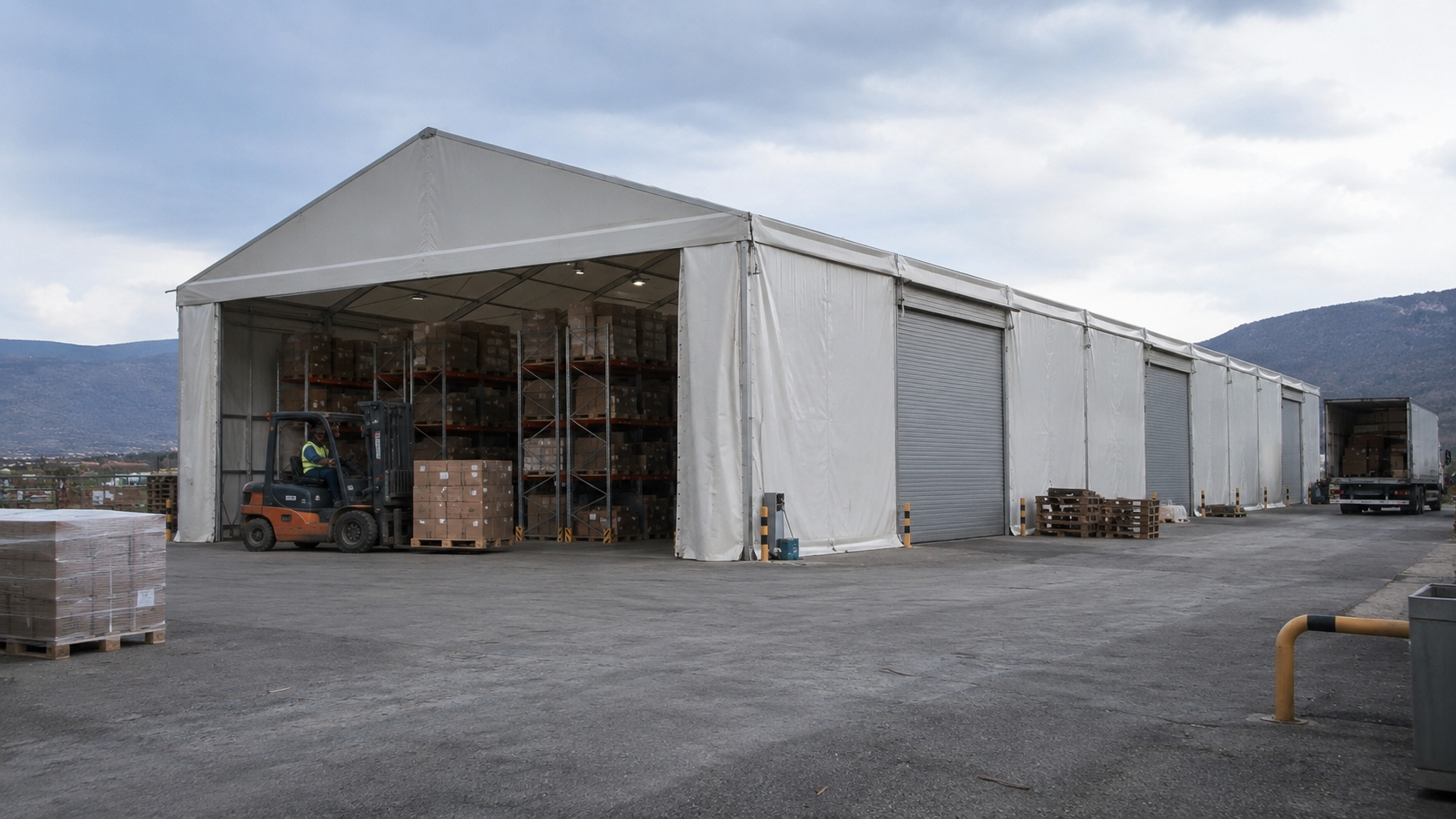
Warehouse projects are one of the most common uses for aluminum frame tents. The structures serve as temporary warehouses, storage/inventory expansion, and industrial storage tents. The column-free interior allows pallet racking and equipment to be arranged without interference from support poles. For these projects, custom doors or loading openings, anchoring systems, and strengthened wind/snow load designs are typically the priority.
Sports Facilities
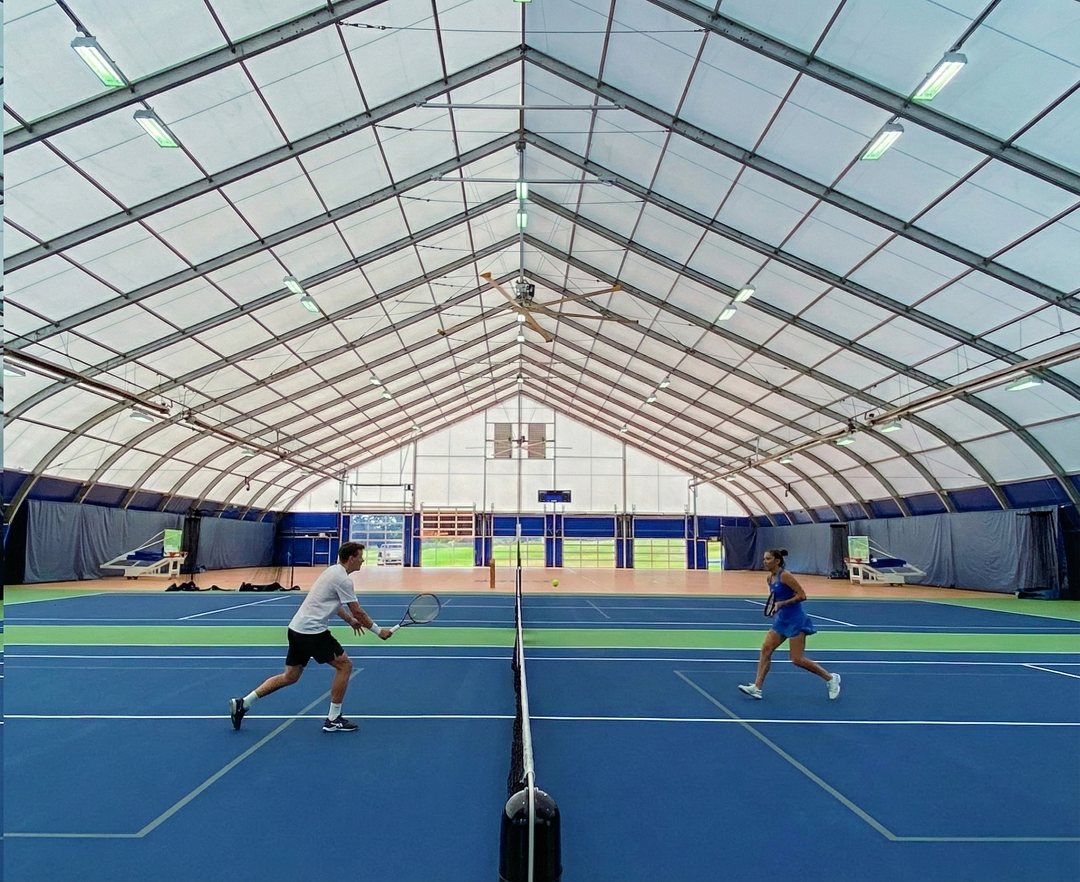
Sports projects often require semi-permanent large structures that can cover courts and training areas. Aluminum frame tents used for sports facilities provide wide clear-span interiors and can be fitted with flooring systems, ventilation, and sidewalls. The modular design supports the fast installation timelines that sports organizations need before a season or tournament.
Events and Weddings
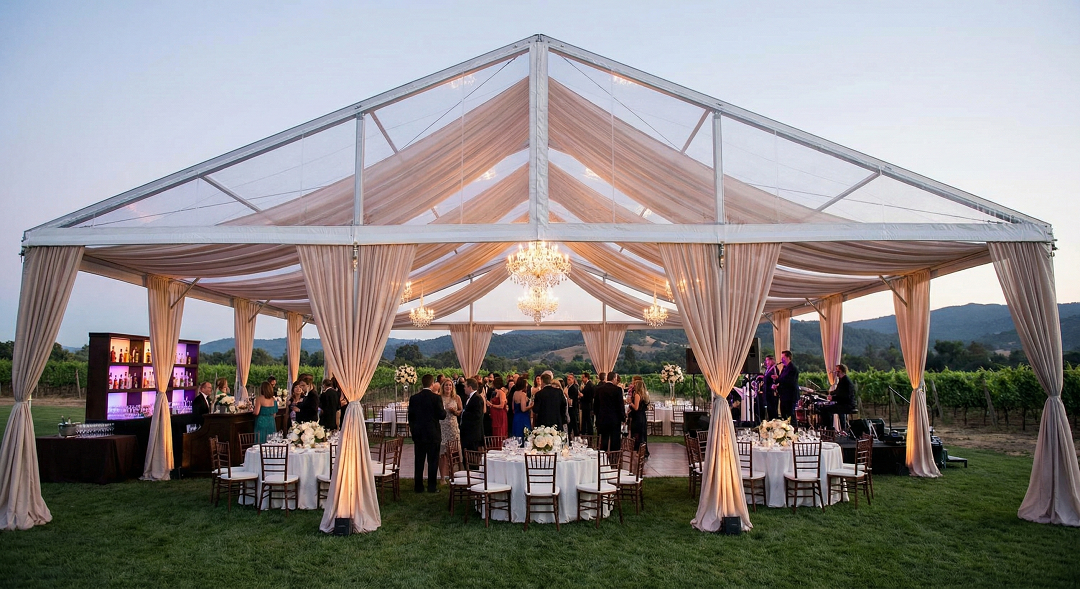
Event and wedding projects need structures that can be assembled quickly, resist weather, and meet fire safety expectations. The aluminum frame tent line is used for temporary or large-scale events and weddings, offering a weather-resistant and movable space with staging, carpets, lighting, and décor accessories. Flame-retardant fabric is a common requirement for these venues.
Exhibitions and Commercial Events
Exhibition venues and event back-of-house areas rely on tents that can be transformed into finished spaces. Cassette flooring, sidewalls, lighting, and climate control help create a commercial-grade environment. Because these projects are often temporary, modular assembly and rapid deployment are important evaluation criteria.
Hospitality and Outdoor Commercial Spaces
Hotels, resorts, and commercial operators use aluminum frame tents for outdoor or semi-outdoor spaces that require waterproofing, wind resistance, and flame retardancy. These projects typically need a balance between structural performance and visual appearance, which can be addressed through color, fabric, windows, curtains, and lighting options.
Aluminum Frame Tent Applications at a Glance
| Application | Common Project Format | Structural Priority | Typical Accessories / Special Requirements |
|---|---|---|---|
| Warehousing & logistics | Temporary or semi-permanent storage facilities | Clear-span column-free interior, modular bay expansion | Custom doors/loading openings, foundation/anchorage, insulation & climate control |
| Sports facilities | Semi-permanent large sports venues | Wide column-free interior | Flooring systems, ventilation, strengthened wind/snow load designs |
| Events & weddings | Temporary or large-scale events and weddings | Rapid deployment, weather protection | Fire-rating, staging & carpets, lighting |
| Exhibitions & commercial events | Exhibition venues, event back-of-house & equipment storage | Flexible modular layout | Cassette flooring, décor & lighting |
| Hospitality / resorts | Outdoor or semi-outdoor commercial space | Weather-resistant movable structure | Sidewalls & doors, insulation, anchoring systems |
Aluminum Frame Tent Project FAQ
What fire and structural standards apply to aluminum frame tent projects?
In the European market, EN 13782:2015 addresses structural stability for mobile, temporary installed tents under wind and snow loads. In the United States, NFPA 701 covers flame propagation for textiles and films. Shoulder Tent supports special project requirements that include fire-rating and strengthened wind/snow load designs for these compliance programs.
Can Shoulder Tent customize an aluminum frame tent for warehouse, sports, or event projects?
Yes. Custom options include size and height, sidewalls and doors, color and fabric, flooring systems, windows and curtains, insulation and ventilation options, and décor and lighting. The company has an R&D center and engineering team and offers custom design and technical support for project-specific requirements.
What lead time should a project plan expect?
Production lead time is 30–35 days, with a monthly capacity of 90 units. The actual schedule depends on project scope, customization level, and accessories. Buyers should confirm delivery timing with the manufacturer before placing an order, especially for time-sensitive warehouse or event programs.
Is there a minimum order quantity for a first project or trial order?
Orders are accepted starting from a single unit, with no minimum order quantity requirement. This allows buyers to evaluate one structure before scaling up to a multi-unit warehouse, sports, or event project.
How can I get a quote for an aluminum frame tent project?
Send project details such as application type, site dimensions, expected wind and snow loads, door requirements, and accessory needs to Shoulder Tent for a project-based quote. The company provides 24/7 online service and pre-sales engineering and technical support. Contact info@shouldertent.com or visit www.shouldertent.com to start the inquiry.
Make the Project Fit Decision Early
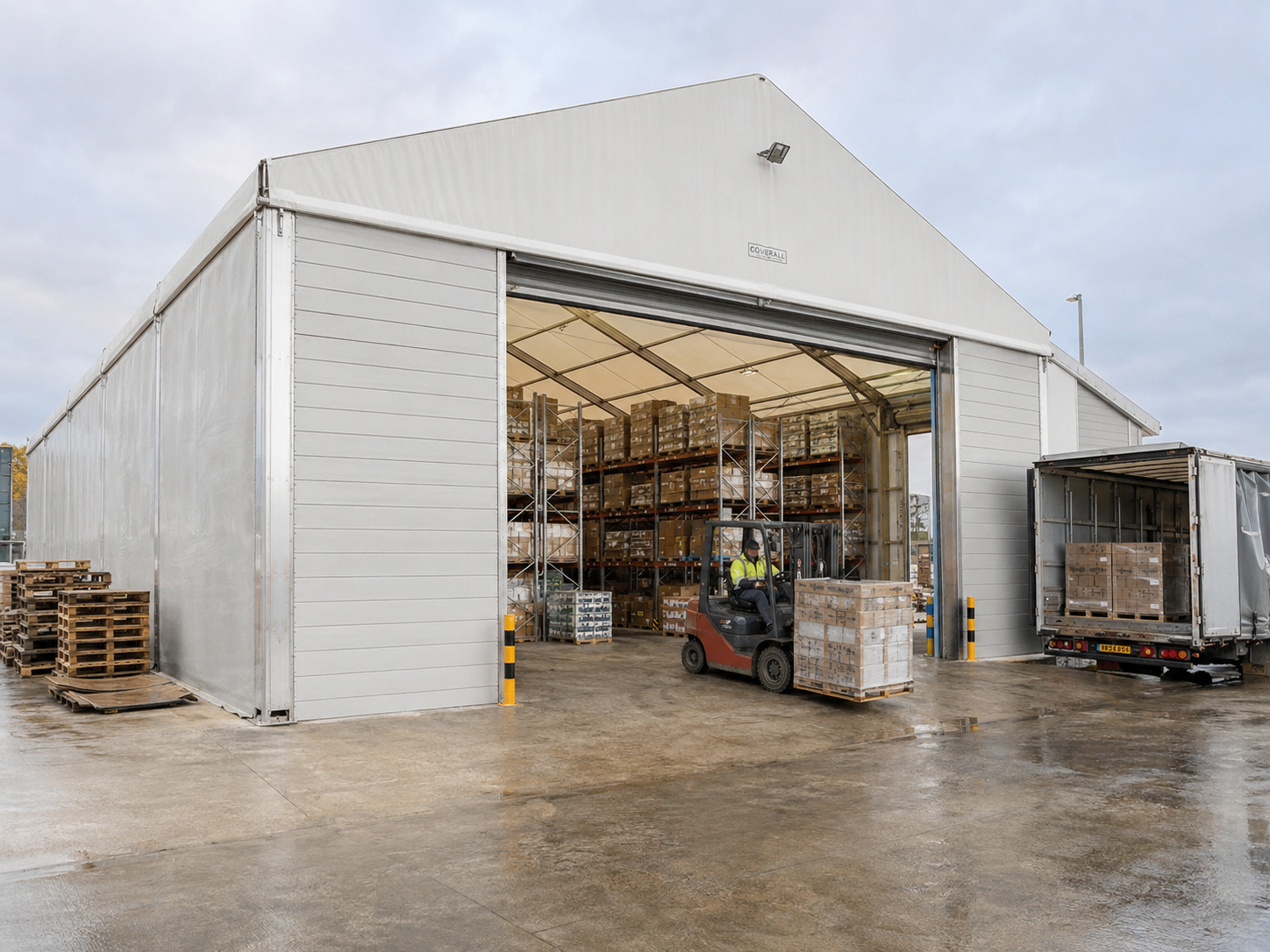
An aluminum frame tent becomes the right solution when it is matched to a defined project: the right span, the right fabric, the right doors, and the right compliance package. Warehouse projects need clear space and access; sports projects need wide enclosures; events and weddings need speed and finish. Defining those requirements early reduces risk and makes the evaluation process faster.
Next step: Download the Shoulder Tent company brochure for product details and project references, or contact the engineering team directly for a specification review.
Have Questions or Need More Details?
Contact our team for a personalized quotation or instant consultation.
Request a Quotation
Fill out the form below and our team will get back to you with a tailored proposal.
WhatsApp Direct Chat
Prefer to chat in real-time? Message us on WhatsApp for instant assistance & quick answers.
- Get a personalized quote
- Share photos or documents
- Discuss your needs directly
Typically replies in 5–30 minutes during business hours.