Aluminum Frame Tent Compliance & Standards Guide: Regional Wind, Snow, Fire & Anchorage
Aluminum Frame Tent Compliance & Standards Guide: Regional Wind, Snow, Fire & Anchorage
Getting an aluminum frame tent approved locally usually comes down to four documents: a wind load design statement, a snow load design statement, flame-retardant fabric evidence, and an anchoring or foundation plan that matches the actual site. Which standard each document must satisfy depends on where the tent will stand. In Europe, the structural reference for mobile and temporarily installed tents is EN 13782:2015, which covers structural stability under wind and snow loads. In the United States, the fire performance of textile covers is commonly evaluated against NFPA 701, the Standard Methods of Fire Tests for Flame Propagation of Textiles and Films.
Most buyers discover the compliance gap late — after the purchase order is signed, when a venue operator, an insurer or a local authority asks for engineering evidence that no supplier ever prepared. This guide is written to prevent that. It explains how regional requirements differ, which design variables decide whether an aluminum frame tent passes review, and exactly what documentation to request before shipment.
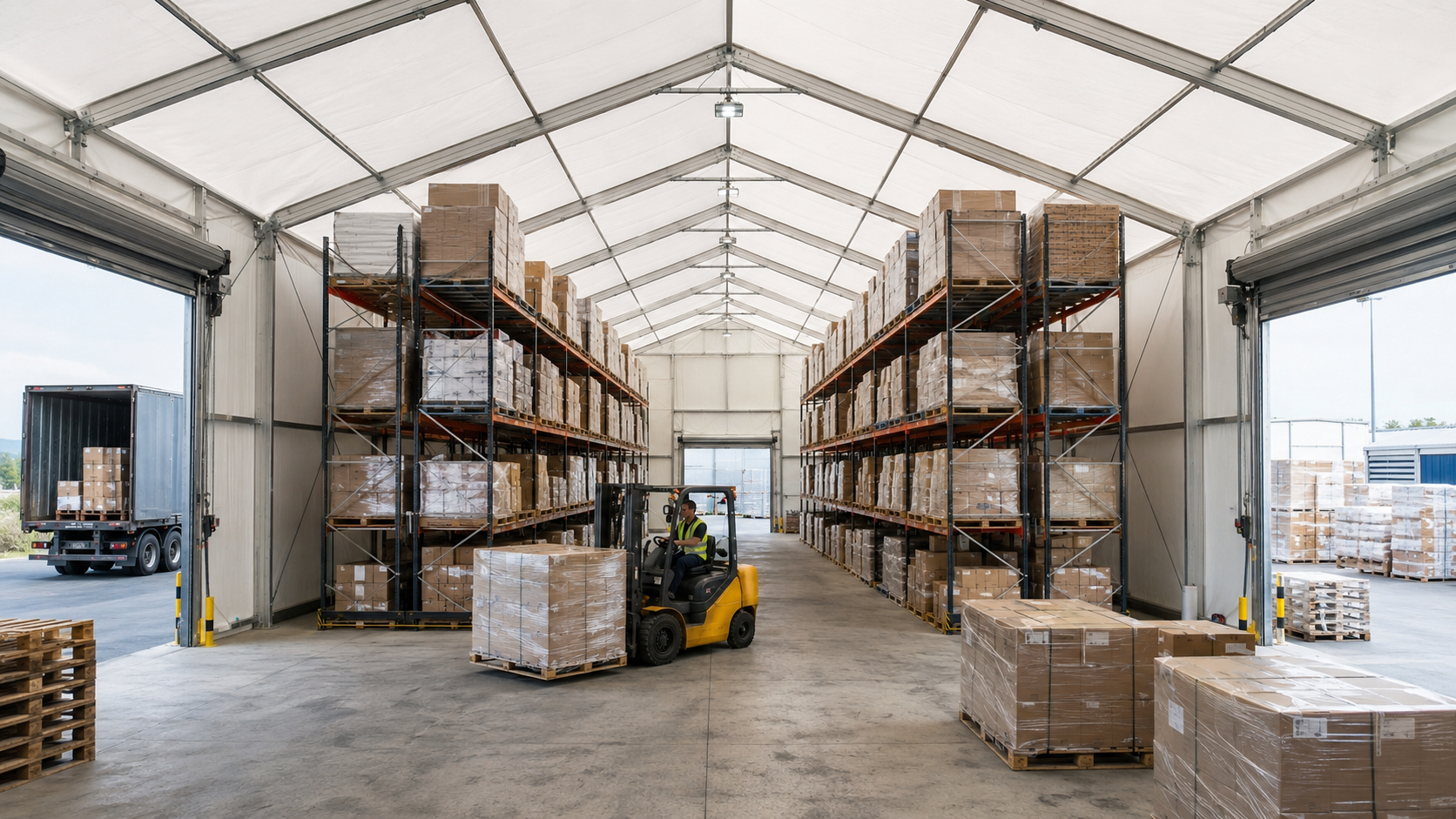
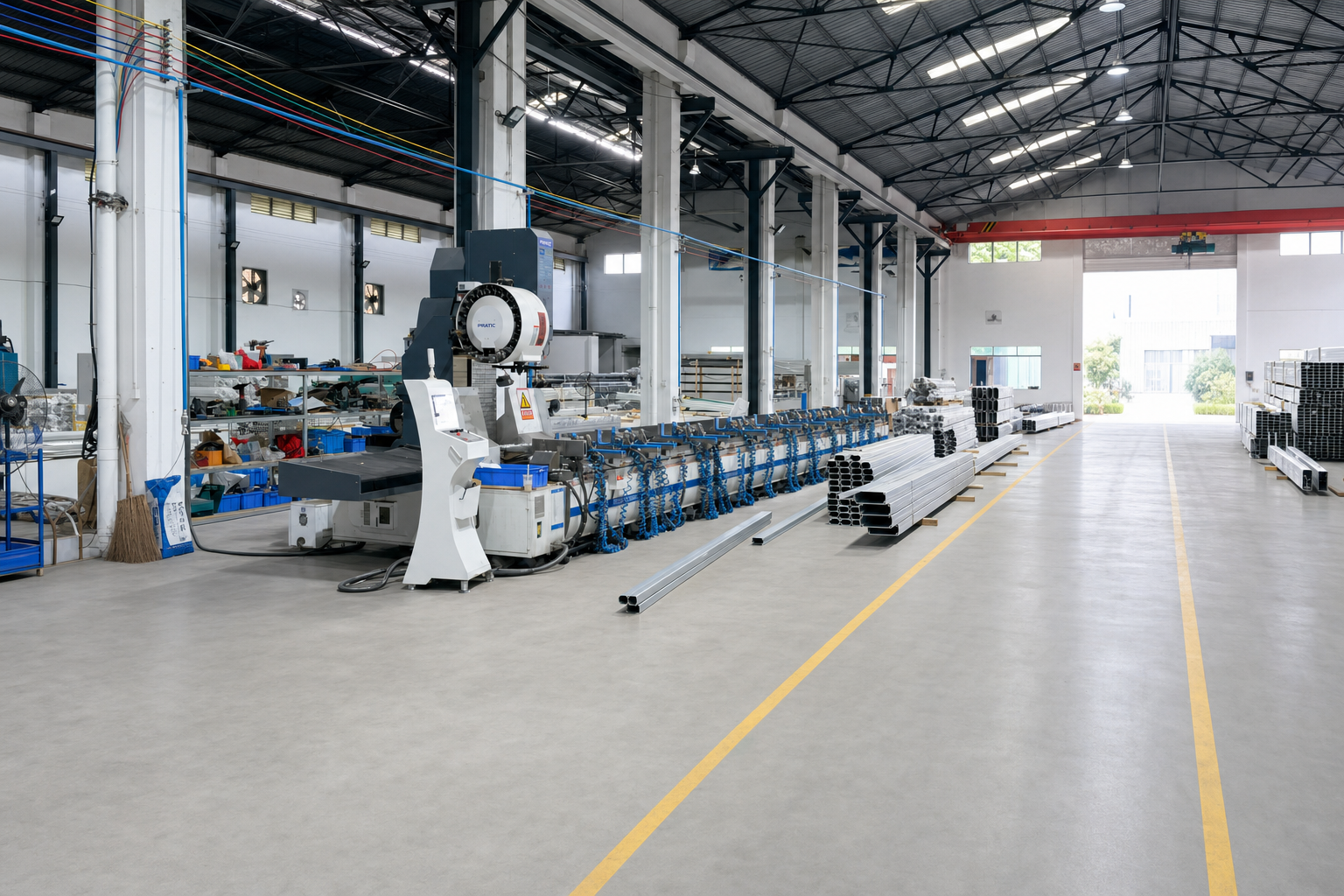
Shoulder Tent — the brand of Shenzhen Shoulder Tent Co., Ltd., established in 2009 and headquartered at No. 4703B, West Tower, Galaxy Twin Towers, Shenzhen, China — is a manufacturer of large prefabricated tent structures used for warehouse storage, sports venues, weddings, events, exhibitions and commercial spaces. Its range includes A-Shape, Arc/Curved, APS hybrid, Dome/geodesic, Mixed/polygon/high-peak and Pagoda/Gazebo aluminum frame tents, produced at a 20,000 m² manufacturing facility with approximately 200 staff and an annual production capacity of 1,000 units. Export accounts for 80% of total sales, with major markets in Europe, the Middle East, Africa, Southeast Asia and South America. More detail on the company and its structures is available at www.shouldertent.com.
Why "Wind-Proof" Is Not a Compliance Statement
Compliance for a large tent is a chain of evidence, not a single certificate. A product can be perfectly suitable for one site and unapprovable on another, because the requirement is generated by the site rather than by the product: the wind speed the structure must resist is calculated from terrain exposure, height and local code factors, and the snow load is calculated from the ground snow load of the location. The tent only answers those numbers.
This is where most cross-border purchases break down. A buyer receives a quotation describing a tent as "wind-resistant" or "suitable for outdoor use" and assumes the structural question is closed. Weeks later, three problems surface at once:
- No quantified design input. Nobody asked for the site wind speed or the ground snow load, so no engineer ever checked the frame against them.
- Material evidence missing. The cover is described as PVC-coated polyester, but no flame propagation test documentation is attached, even though fire performance is the requirement most often checked first by venue operators.
- Anchorage treated as an accessory. Anchoring is the transfer point between the structure and the ground; on a large clear-span tent it is frequently the deciding factor in approval, and it is almost never specified at quotation stage.
A practical way to think about it: the tent frame resists wind and snow as a structure, the cover governs fire behaviour, and the anchorage or foundation governs whether the structure actually stays on the ground. Local approval requires all three answers in writing, from the same supplier, before the goods ship.
Industry Background: Why Regional Requirements Diverge
Demand for aluminum frame structures has grown alongside the use of temporary and semi-permanent buildings for storage, sport and events. Industry reporting cited by Rethinking The Future projects the global event tent market, which includes aluminum frame structures, to pass a valuation of USD 3 billion by 2025, growing at a CAGR of 6.2%. A broader definition covering storage, sports and event tents, reported by Shelter Structures, projects growth from USD 4.01 billion in 2025 to USD 6.07 billion by 2033, with a CAGR in the 5–7% range. The scope of these estimates differs, so the absolute figures should be read as directional rather than equivalent.
On the supply side, China exported approximately USD 5.55 billion of "Aluminium Structures" (HS 7610) in 2024, according to OEC data — a category that covers modular tent frames and related aluminium components. The commercial reality is that a large share of the world's aluminum frame tent inventory crosses at least one border, which is precisely why compliance requirements are national or regional rather than universal.
Europe addressed the gap in a dedicated standard: EN 13782:2015, published by the European Committee for Standardization (CEN), governs safety requirements for mobile and temporarily installed tents, including structural stability under wind and snow loads. In the United States, fire performance of the textile envelope is handled through NFPA 701, maintained by the National Fire Protection Association, which covers flame propagation of textiles and films. Other markets — including much of the Middle East, Africa, Southeast Asia and South America — set requirements through national or municipal building and fire authorities, venue operators and insurers. Naming an American or European standard in those markets does not automatically satisfy the local reviewer; the correct move is to ask the authority and the insurer what evidence they will accept, then specify that requirement to the supplier.
Regional Requirements at a Glance
| Market | Primary framework to verify | What it governs | Documentation to request |
|---|---|---|---|
| European Union / Europe | EN 13782:2015 (CEN) | Safety requirements for mobile and temporarily installed tents; structural stability under wind and snow loads | Wind and snow load design statement, frame and component specification, fabric data, anchoring plan |
| United States | NFPA 701 for fire performance of textiles and films, plus the applicable local structural review | Flame propagation behaviour of the cover material; structural approval through the local authority having jurisdiction | Fabric flame propagation test documentation, cover material specification, structural design assumptions, anchoring plan |
| Middle East, Africa, Southeast Asia, South America | National or municipal building, fire and venue requirements — confirm before design freeze | Structural stability, fire performance, foundation and site approval, insurance conditions | Written statement of the required wind speed and snow load, fire documentation, foundation/anchoring design, installation method statement |
Decision rule: never accept a standard name as proof. Ask the authority and the insurer which specific document they will accept, then require that same document by name in the purchase order. Requirements are restated in the buyer's own jurisdiction, not imported from the supplier's home market.
The Design Variables That Decide Approval
Four variables carry almost all of the compliance weight in an aluminum frame tent project. Each can be specified at quotation stage, and each produces a document that the buyer can file for local review.
1. Wind Load
Wind is the governing load for most temporary structures because it acts on the largest exposed surface: the roof and sidewall envelope. The aluminum frame tent range is engineered for a maximum wind load of 100–120 km/h, depending on model, span and configuration. In practice, the buyer's job is to state the required design wind speed for the site — derived from the location, terrain category, height and the applicable local code — and the supplier's job is to confirm that the selected model and bracing layout meets it, or to reinforce the design until it does.
Two details commonly decide the outcome. First, wind load must be assessed with the tent in its actual configuration — open-sided event configuration and fully clad warehouse configuration behave differently. Second, wind acts upward as well as sideways, so uplift is what sizes the anchorage. A wind number without an uplift path to the ground is incomplete.
2. Snow Load
Snow is a static load concentrated on the roof, and it is the requirement that most often forces a design change rather than a minor adjustment. The aluminum frame tent range supports snow load up to 1.9 kN/m², and units can be specified with strengthened wind and snow load designs where a project requires it. Snow accumulation is not uniform: drifting at valleys, sidewalls and adjacent buildings can raise local loads above the flat roof value, so the buyer should provide the ground snow load for the site and any known drift condition rather than a general regional description.
3. Fire Performance of the Cover
The envelope material is a double-layer PVC-coated polyester tarpaulin. Fire performance is a project requirement rather than an automatic property of the category, and fire-rating is one of the special requirements that can be specified for industrial, event and storage applications. Where the destination market applies NFPA 701, the relevant evidence is flame propagation test documentation for the specific fabric used, not for a different fabric in the same product family. Venue operators and insurers typically ask for this document before they ask for anything structural, so it belongs in the first document request.
4. Anchorage and Foundation
Anchoring converts structural analysis into site reality. The tent range supports anchoring systems and foundation or anchorage treatments as project-specific engineered items, alongside the accessory scope that usually accompanies them: cassette flooring, sidewalls and doors, ventilation and insulation accessories, lighting, staging and carpets. The buyer supplies soil or surface information — asphalt, concrete, grass, gravel, compacted hardcore — plus the calculated uplift, and the anchoring design follows from those inputs.
On semi-permanent warehousing, industrial storage and workshop installations, the foundation question also determines whether the structure is treated as a temporary or quasi-permanent installation by the local authority, which in turn changes the documentation set. Resolving that classification early is cheaper than resolving it at inspection.
Material and Service-Life Basis
The structure uses an aluminum alloy profile frame with a double-layer PVC-coated polyester tarpaulin cover, and the modular assembly combines prefabricated aluminum profiles with fabric covers so the building can be installed and dismantled rapidly. For planning purposes, widely cited industry reference data for this class of structure indicates a service life of roughly 15–20 years for aluminium alloy frames such as 6061/T6 and 5–8 years for PVC-coated fabric covers under standard outdoor conditions — a split that matters for budgeting, because covers are a replaceable wear component while the frame is a long-life asset.
Step-by-Step: Building a Compliance File Before You Order
The following sequence works for warehouse tents, sports tents, event tents and large clear-span structures alike, because it is driven by the site rather than by the product.
- Identify the approving authority and the insurer. Before any design discussion, confirm who will review the installation — the municipal building department, the fire authority, the venue operator, or a combination — and ask which documents each will accept. This single step prevents most late-stage redesign.
- Fix the site inputs. Record the design wind speed, the ground snow load, terrain exposure, and the surface type where anchoring will be installed. These four inputs drive every subsequent technical decision.
- Select the structure and confirm the load capacity. Match the span and model to the intended use — model designations in the aluminum frame tent range include S30-1, S32, S45-1, S45-2 and S60-1 — then confirm in writing that the configuration meets the site wind and snow requirements at maximum wind load of 100–120 km/h and snow load up to 1.9 kN/m², or is reinforced to do so.
- Specify the cover and the fire requirement. Confirm the double-layer PVC-coated polyester tarpaulin specification and require the flame propagation test documentation that matches the destination market, such as NFPA 701 evidence for United States projects.
- Engineer the anchorage. Provide soil or surface data and calculated uplift so the anchoring system and foundation treatment can be designed for the site instead of selected from a default accessory list.
- Request the documentation pack with the quotation. Ask for the load design statement, the material and fabric specification, the anchoring plan, the installation method statement and the accessory schedule as named deliverables, not as attachments promised later.
- Agree on engineering and quality verification before shipment. Schedule a pre-shipment engineering and quality review covering frame components, cover fabrication, bracing and anchoring hardware against the approved design, so that deviations are corrected at the factory rather than discovered on site.
Shoulder Tent operates an in-house R&D centre and engineering team, and provides custom design and technical support — which is the point in the process where a buyer's site inputs are translated into a buildable, documented specification rather than a catalogue selection.
Use Cases: How Compliance Priorities Shift by Application
Warehousing, Industrial Storage and Workshop Tents
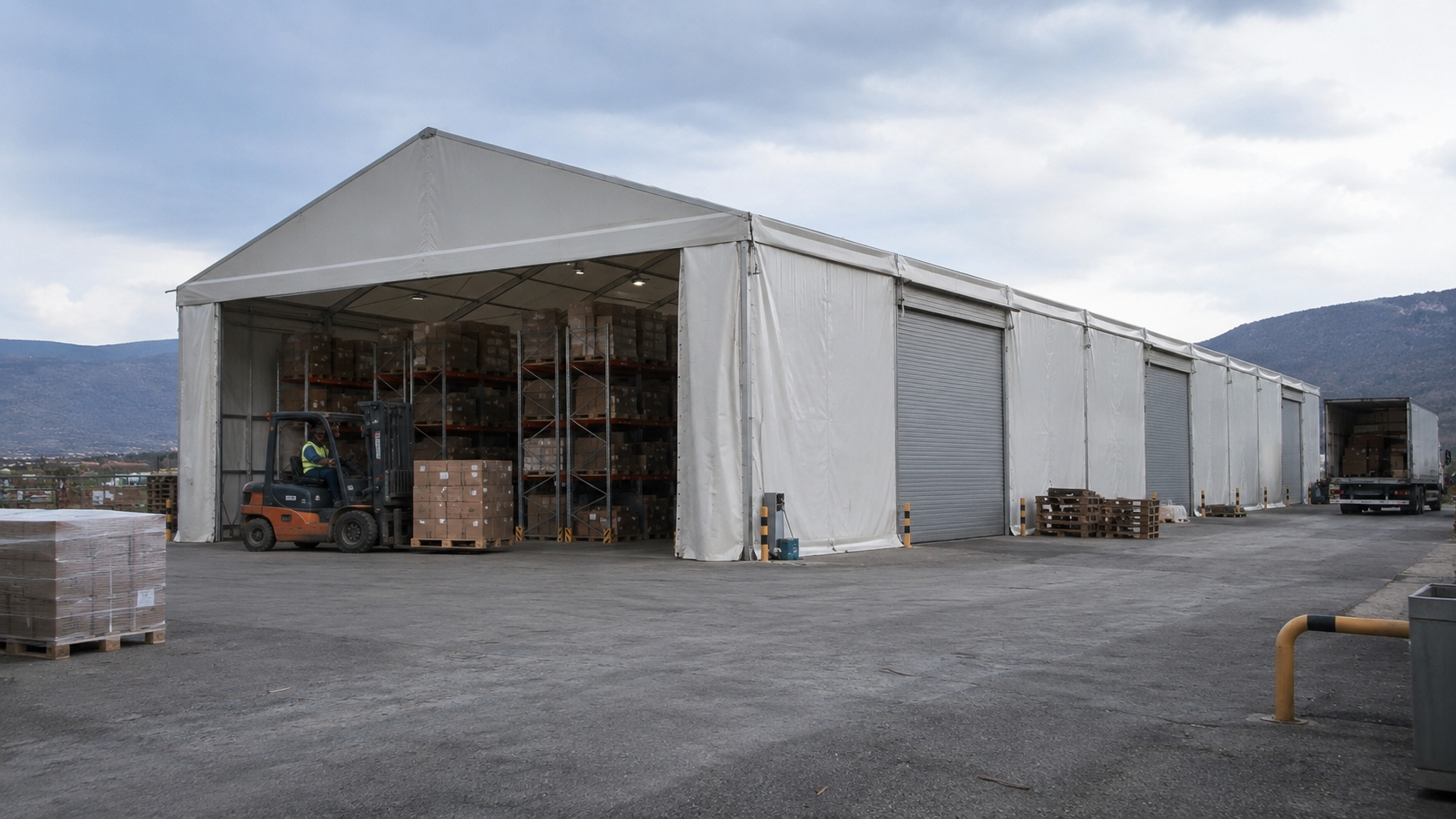
For temporary or semi-permanent warehousing and industrial storage, snow load and anchorage dominate, because the structure is expected to remain in place through winter and to carry interior equipment loads. Fire performance matters where the tent sits close to existing buildings or stores combustible goods, and custom doors and loading openings are usually required for material handling. Documenting the foundation treatment is often the difference between a permitted and a non-permitted installation.
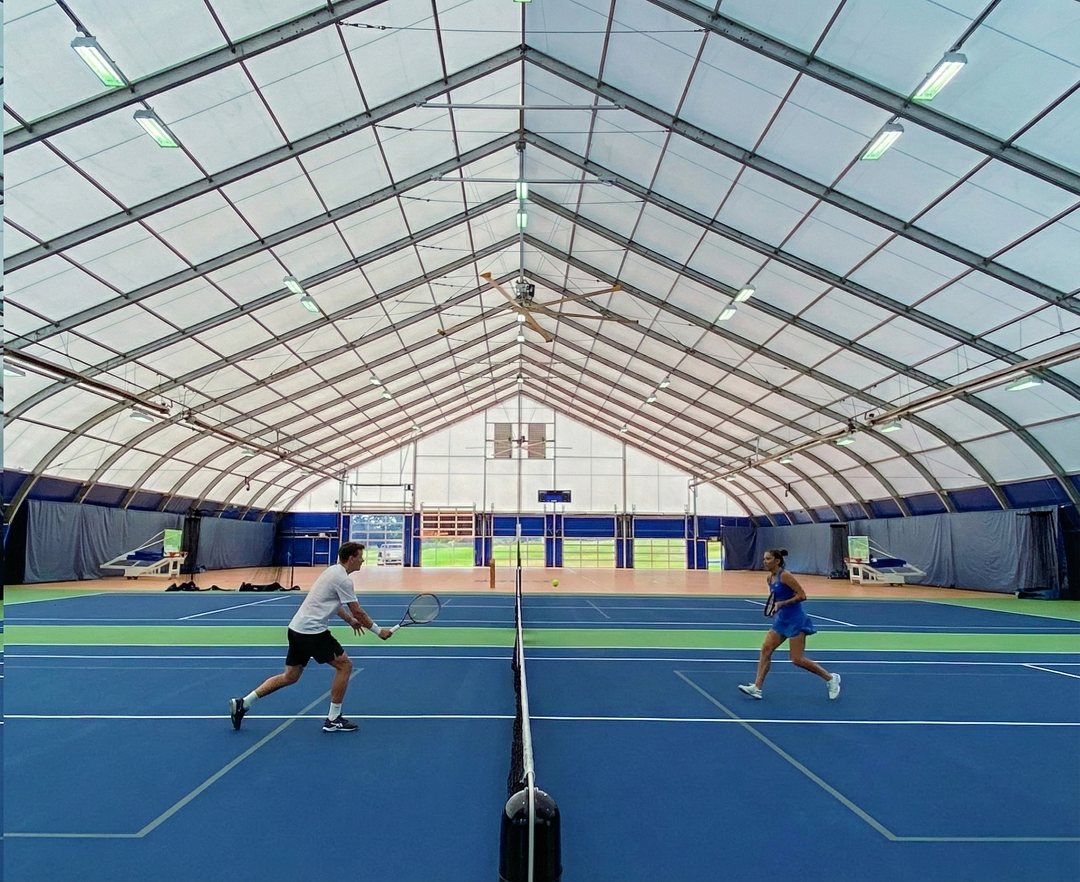
Sports Venues, Tennis, Padel and Pickleball Structures
Indoor-court structures are typically installed on exposed sites with wide open terrain, where wind exposure is highest and uplift is a first-order design condition. Wind load capacity and anchoring design carry the review, with ventilation and insulation accessories specified to control the interior climate for play.
Events, Weddings and Marquee Tents
Temporary event and wedding installations are usually short-duration but high-occupancy, so fire performance of the cover and a defensible anchoring plan are the first documents an operator or fire officer will request. Rapid installation and dismantling, using modular prefabricated aluminium profiles and fabric covers, is the operational advantage — but speed is only acceptable when the anchoring method has been designed for the surface rather than improvised on site.
Aircraft Hangar, Workshop and Large Clear-Span Structures
Large clear-span structures combine the longest spans with the largest wind-catching surfaces. Compliance here is an engineering exercise in bracing, base plate design and foundation detail, and it benefits most from early engagement of an engineering team that can review the site package before the design is frozen.
Comparison Table: Requirement, Engineering Response and Evidence to Request
| Design variable | What the buyer must define | Engineering response in the tent specification | Evidence to request |
|---|---|---|---|
| Wind load | Design wind speed, terrain exposure, tent configuration (open or clad) | Maximum wind load of 100–120 km/h by model and configuration; strengthened wind load design where required | Wind load design statement and bracing layout |
| Snow load | Ground snow load and known drift conditions at the site | Snow load up to 1.9 kN/m²; strengthened snow load design where required | Snow load calculation for the selected span |
| Fire performance | Fire requirement of the destination market and the venue operator | Double-layer PVC-coated polyester tarpaulin cover; fire-rating specified as a project requirement | Flame propagation test documentation for the actual fabric (for example NFPA 701 for United States projects) |
| Anchorage and foundation | Surface type, soil or substrate data, calculated uplift | Anchoring systems and foundation/anchorage treatments engineered per project | Anchoring plan and installation method statement |
| Envelope and accessories | Intended use, climate control needs, access requirements | Cassette flooring, sidewalls and doors, ventilation and insulation accessories, lighting, staging and carpets | Accessory schedule and insulation specification |
| Service-life planning | Expected ownership period and replacement budget | Aluminium alloy profile frame with replaceable PVC-coated fabric cover | Material specification; industry reference data indicating roughly 15–20 years for 6061/T6 aluminium frames and 5–8 years for PVC-coated covers in standard outdoor conditions |
Frequently Asked Questions
Which standards apply to an aluminum frame tent in Europe and the United States?
In Europe, the reference standard for mobile and temporarily installed tents is EN 13782:2015, published by the European Committee for Standardization (CEN), and it covers structural stability under wind and snow loads. In the United States, fire performance of the textile envelope is commonly evaluated against NFPA 701, the Standard Methods of Fire Tests for Flame Propagation of Textiles and Films, maintained by the National Fire Protection Association, while structural approval is handled through the applicable local review. A tent approved in one market is not automatically approved in another, because each jurisdiction defines its own required wind speed, snow load and fire evidence.
What wind and snow loads can an aluminum frame tent be engineered for?
The aluminum frame tent range, which includes model designations S30-1, S32, S45-1, S45-2 and S60-1, is engineered for a maximum wind load of 100–120 km/h and snow load up to 1.9 kN/m², with strengthened wind and snow load designs available where a project requires higher performance. The governing figure is always the site requirement, not the product maximum: the design wind speed and ground snow load for the actual location determine whether a given model and configuration is acceptable, so both should be stated in writing before the order is placed.
Does compliance documentation change the cost of an aluminum frame tent project?
Compliance changes cost only where it changes the design. The variables that move a budget are the selected span and model, the required wind and snow load performance, the cover specification and fire requirement, and the anchoring or foundation treatment — not the paperwork itself, which is an output of those decisions. The practical approach is to obtain the load design statement, fabric documentation and anchoring plan as named deliverables in the quotation, so that any cost associated with reinforcement or foundation work is visible before the purchase order rather than after the site survey.
How can flame-retardant fabric and load design be validated before shipment?
Validation happens in two places. Fabric validation is documentary: request flame propagation test documentation that corresponds to the specific double-layer PVC-coated polyester tarpaulin used for the order, in the format the destination market accepts, such as NFPA 701 evidence for United States projects. Structural validation is design-led: confirm the load statement against the site wind speed and ground snow load, then schedule a pre-shipment engineering and quality review covering frame components, cover fabrication, bracing and anchoring hardware against the approved design. Sample and prototype review can support the process where a buyer needs physical confirmation of material, finish and connection details before mass production.
What should be planned for lead time and documentation before installation?
Plan backwards from the installation date and treat documentation as a milestone, not an afterthought. The sequence that protects a schedule is: secure the approving authority's document list, freeze site inputs (wind speed, ground snow load, surface type), confirm the structure and load capacity, agree the fire documentation and anchoring design, then allow time for the pre-shipment engineering and quality review before dispatch. Buyers who consolidate these steps into the enquiry stage typically avoid the redesign loop that occurs when compliance is checked after the goods have shipped. Shoulder Tent's engineering team and R&D centre provide custom design and technical support throughout this process, and buyers can request a quotation, a sample evaluation or the current product documentation pack from the export team directly.
Conclusion: The Right Time to Ask Is Before the Quotation
Aluminum frame tent compliance is decided by four questions: what wind load must the structure resist, what snow load must the roof carry, what fire evidence does the cover require, and how will the structure be anchored to this specific site. The answers come from the destination market and the site — from EN 13782:2015 in Europe, from NFPA 701 and the local structural review in the United States, and from the relevant national, municipal and insurer requirements in the Middle East, Africa, Southeast Asia and South America. The supplier's role is to convert those answers into a documented design and to verify it before shipment.
Buyers who specify the requirement at enquiry stage receive a structure that matches the site and a file that satisfies the reviewer. Buyers who specify it later receive redesign, delay and, occasionally, a tent that cannot be installed where it was planned. The cost of asking early is a short email; the cost of asking late is a project schedule.
Next Step: Build Your Compliance File With Shoulder Tent
Send the design wind speed, ground snow load and surface type for your site, and the Shoulder Tent engineering team can confirm a suitable model, prepare the load design statement and anchoring plan, and arrange sample or documentation review before production. Download the full product and capability brochure here: Shoulder Tent Company Brochure (EN).
Email: info@shouldertent.com | Phone / WhatsApp: +86 158 1850 8822 | Website: www.shouldertent.com
Shenzhen Shoulder Tent Co., Ltd. — Management Center Shenzhen: No. 4703B, West Tower, Galaxy Twin Towers, Shenzhen, China; Marketing Center Guangzhou: Room 1508, South Tower, Guangzhou World Trade Center Complex, China.
Have Questions or Need More Details?
Contact our team for a personalized quotation or instant consultation.
Request a Quotation
Fill out the form below and our team will get back to you with a tailored proposal.
WhatsApp Direct Chat
Prefer to chat in real-time? Message us on WhatsApp for instant assistance & quick answers.
- Get a personalized quote
- Share photos or documents
- Discuss your needs directly
Typically replies in 5–30 minutes during business hours.