Factory-Direct vs. Dealer vs. Rental: Aluminum Frame Tent Sourcing Compared
An aluminum frame tent can be sourced three ways: built to order by the manufacturer, supplied from a local dealer's stock, or rented for the duration of a project. The three routes can deliver a similar-looking structure, but they carry different cost structures, different levels of configuration freedom, and different lines of engineering accountability. This comparison sets the three routes side by side on the dimensions that actually decide the purchase order: upfront cost, customization freedom, long-term ownership value, and deployment speed.
Short answer. Buy factory-direct (ODM) when the structure will be owned for more than one season, when the configuration has to be adapted to the site — size and height, sidewalls and doors, colour and fabric, flooring, windows and curtains, insulation and ventilation, décor and lighting — or when one design will be repeated across several sites. Use a local dealer when a single stock-configuration unit is needed immediately and no engineering change is acceptable. Rent when the requirement is measured in days or weeks and the structure has no residual value to the buyer. Factory-direct carries the lowest long-run cost per usable square metre; dealer and rental routes trade that away for speed and near-zero capital outlay.
Problem definition: the sourcing decision hides behind the product decision
Most aluminum frame tent enquiries are framed as product questions — span width, eave height, fabric weight. By the time a buyer reaches the decision and execution stage, the harder question is already fixed: who should supply it. The supplier type determines how much of the specification can be changed, how long the asset stays on the balance sheet, who answers when a wind-load calculation is challenged, and how quickly a second or third structure can be added to the same site.
Three supply chains sit behind the same nominal product:
- Manufacturer (factory-direct / ODM): the buyer contracts the entity that extrudes, cuts, welds and sews the structure, and the buyer carries the engineering brief, the Incoterms decision and the inspection responsibility.
- Local dealer: the buyer contracts a reseller that holds or orders stock, adds handling and margin, and usually limits the order to the configurations the dealer already carries.
- Rental fleet: the buyer contracts access to a structure for a defined period, with no asset at the end and no ability to change the design beyond what the fleet already contains.
The common execution error is comparing the three routes on price per square metre from a quotation. A rental quote and a factory-direct quotation are not the same unit of measure: one prices time, the other prices an asset with an operational life. A dealer quote adds a handling layer on top of a manufacturer price that the buyer can often reach directly. Comparing them requires normalising to cost per usable square metre per year of ownership, plus the value of the configuration the buyer actually needs.
Five variables settle the decision in practice: ownership horizon, depth of customization, deployment window, repeat or multi-site volume, and who is accountable for the structural engineering. Buyers who answer those five questions honestly rarely need a long deliberation — the route selects itself.
Industry background: where aluminum frame tents are specified today
Aluminum frame tents have moved from a purely event product to a structural category used across industrial, sports and commercial applications. Grand View Research segments the aluminum frame tent market by application into warehouse and industrial storage, sports and recreation, weddings and events, and aircraft hangars, and identifies warehouse and industrial storage as a segment driven by demand for cost-effective, flexible storage capacity (SRC-0012).
Demand signals support that segmentation. An industry analysis published through EIN Presswire and Rethinking The Future projects the commercial event tent segment to exceed USD 3 billion by 2025, and forecasts the broader tent category — storage, sports and events — to reach USD 6.07 billion by 2033 (SRC-0001). In the rental segment specifically, lightweight aluminum framing accounts for nearly 58% of total deployed structures, according to Business Research Insights (SRC-0004), which indicates that aluminum frames are the working standard across both ownership and rental models.
The frame itself is a long-life component. Aluminum frame structures built from 6061-T6 alloy typically have a service life of 15 to 20 years under standard outdoor conditions (SRC-0001). That number is the pivot of the whole sourcing comparison: a route that produces an owned asset with a 15–20 year frame life competes on a completely different cost curve from a route that produces access for a single season.
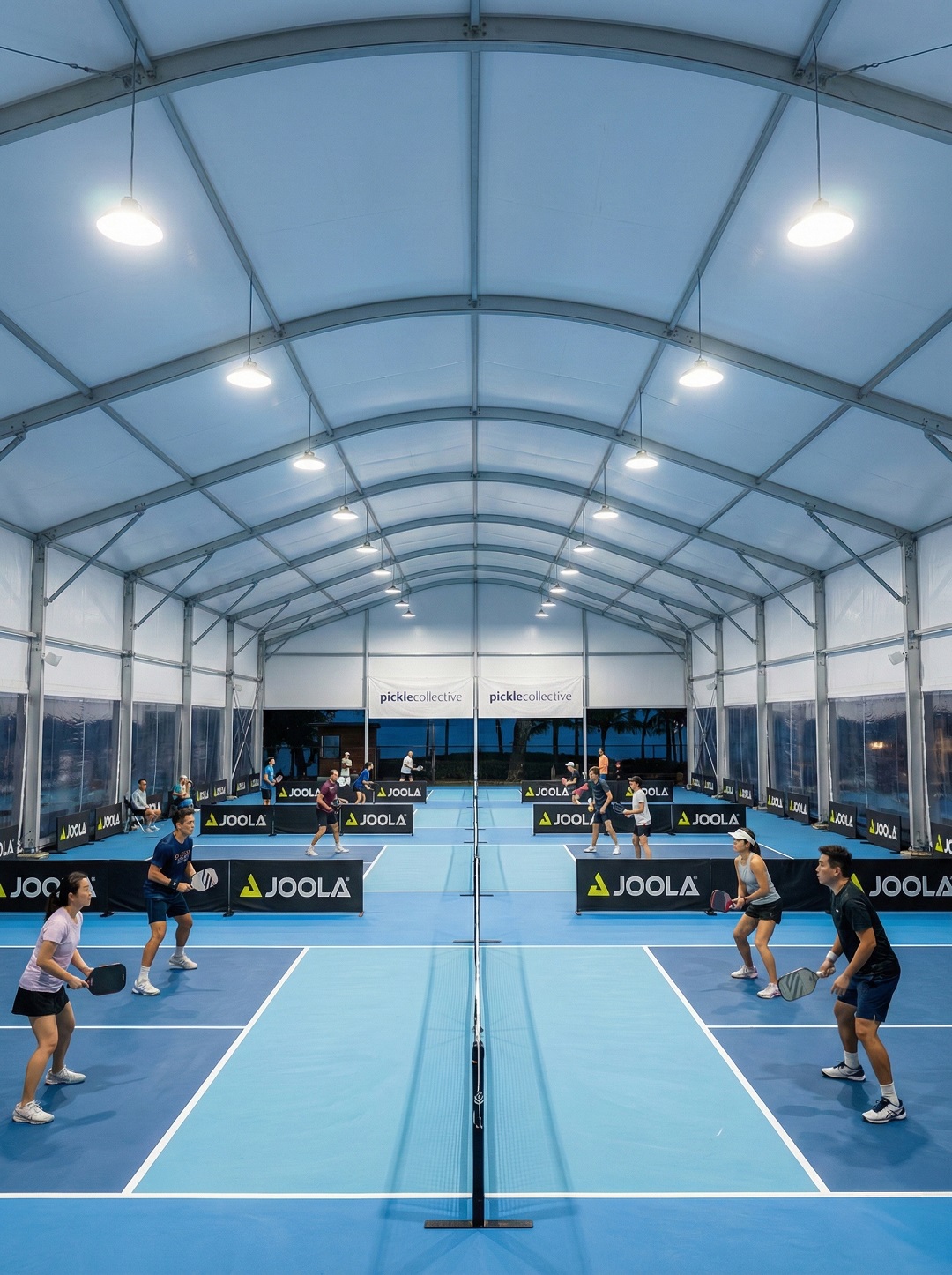
Application demand is also shifting. CourtSource reports that indoor pickleball and padel facilities command 2–3x higher utilization rates than outdoor courts and represent 36.9% of total supply as of 2026 in the United States (SRC-0005). Indoor racket-sport operators need large clear-span envelopes, which is precisely the geometry that aluminum frame structures provide — and those operators typically need several courts, added in phases, which pushes them toward a repeatable factory relationship rather than a one-off purchase.
Detailed solution: how each sourcing route works
Route 1 — Factory-direct (ODM) from the manufacturer
Factory-direct sourcing means contracting the manufacturer for a structure designed to the site, rather than selecting from a catalogue. The buyer gains configuration control, direct access to the engineering team, and a per-unit cost that does not carry a reseller layer. The buyer also takes on more work: a written engineering brief, an Incoterms decision, an agreed acceptance standard, and a pre-shipment inspection.
On the operational side, Shoulder Tent quotes a minimum order quantity of 1 unit, a 30–35 day production lead time, and a monthly capacity of 90 units, with payment by T/T and standard Incoterms of FOB, CIF and CFR. Engineering support runs 24/7 across pre-sales and after-sales. The company reports 3800+ units deployed globally since 2009.
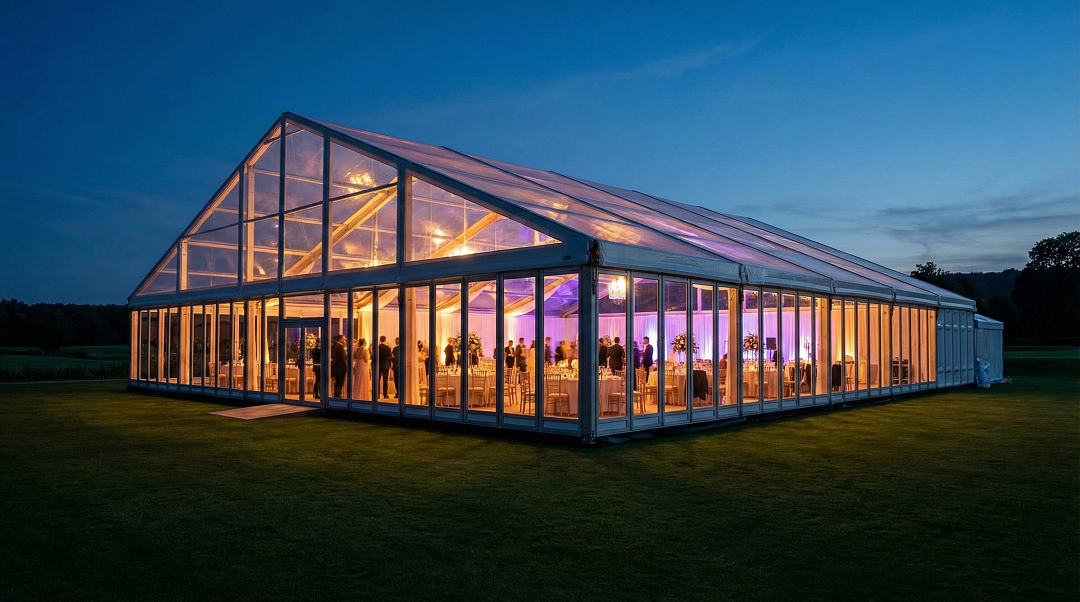
Customization is the differentiating capability of this route. Configurations can be adjusted across size and height, sidewalls and doors, colour and fabric, flooring, windows and curtains, insulation and ventilation, and décor and lighting — all set against site conditions, usage needs, dimensions and functional requirements. For phased projects, modular 3 m and 5 m bay expansion allows a structure to grow without redesigning the original build.
Route 2 — Local dealer
A dealer is the right answer to a narrow question: one unit, in stock, needed this week, with no engineering change. The dealer absorbs import complexity, holds inventory, and can deliver locally. The cost is a handling and margin layer on top of the manufacturer price, and a configuration menu limited to what the dealer ordered. When a site turns out to need a different eave height, an extra door bay, or a heavier fabric specification, the dealer has to go back to the manufacturer — the buyer inherits the delay without inheriting the engineering relationship.
Dealers also complicate repeat programs. A five-site rollout becomes five separate commercial conversations, and consistency of frame specification, fabric and anchoring detail depends on the dealer's order history rather than a controlled production line.
Route 3 — Rental
Rental removes capital outlay and converts the structure into an operating cost. For a two-week event, a seasonal overlay, or a single tournament weekend, that is often the correct economic choice — the buyer needs access, not an asset. The limits appear as soon as duration extends: rental fees accumulate across repeated periods, the buyer builds no asset, and the configuration is whatever the fleet contains. Rental also does not transfer engineering accountability for the buyer's specific wind and snow exposure, because the rental operator is optimising a fleet, not a site.
The structural quality of the rental route is not in question — aluminum framing dominates deployed rental structures. The mismatch is one of ownership horizon, not of product quality.
Step-by-step breakdown: executing a factory-direct order
- Define the use case and envelope. State the application — warehouse storage, industrial workshop, sports court, event, wedding, exhibition, aircraft hangar — and the required clear span, eave height and ridge height. Clear-span geometry drives the frame profile selection.
- Write the engineering brief. Give the site location, exposure and the wind and snow loads that apply locally. Aluminum profiles are then designed for those loads, and project-specific anchoring reinforcement is specified rather than assumed.
- Lock the configuration. Confirm size and height, sidewalls and doors, colour and fabric, flooring, windows and curtains, insulation and ventilation, and décor and lighting. This is the step where the factory-direct route earns its advantage; it is also the step that must be written down before the quotation is final.
- Confirm commercial terms. Agree the order quantity — MOQ starts at 1 unit — payment by T/T, and the Incoterms basis (FOB, CIF or CFR). Payment terms can be adjusted to the buyer's requirements; the shipping method and Incoterms should be confirmed directly with the sales team.
- Agree acceptance criteria before production. Put span, height, frame material, fabric specification, door and window positions, anchoring method and accessory list into the acceptance document so that the pre-shipment inspection has a fixed reference.
- Run production against the 30–35 day lead time. For repeat or multi-site programs, the 90-unit monthly capacity sets the realistic phasing ceiling rather than a per-order guess.
- Complete the pre-shipment quality inspection. Verify frames, connectors, fabric, hardware and packing against the acceptance document before the container is closed.
- Install, commission and hand over documentation. Use the installation guidance and the 24/7 engineering support line during erection, and retain the risk-control record — fabric flame-retardant documentation, anchoring design, and inspection schedule — for the life of the structure.
Use cases: where factory-direct pays back fastest
Industrial storage and temporary warehouse
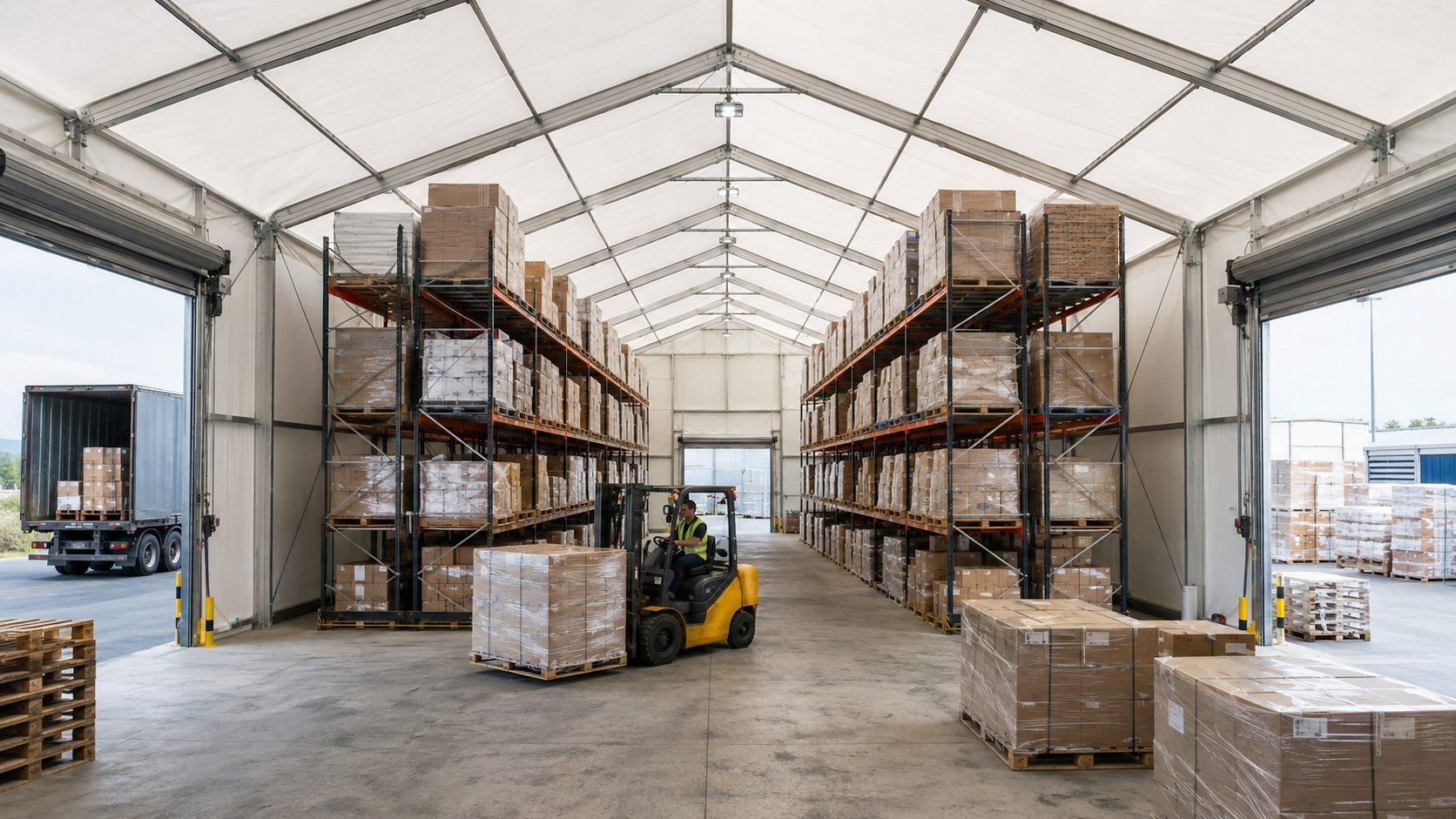
A 3PL or manufacturer adding overflow capacity needs a structure that matches racking layout, door positions for forklift access and ventilation requirements. A dealer cannot re-cut a frame; a rental fleet cannot re-position doors. Factory-direct configuration against site conditions is the only route that produces a fit-for-purpose envelope, and modular 3 m / 5 m bay expansion lets capacity be added later in defined increments.
Sports venues — pickleball, padel, tennis
Indoor racket-sport operators need large clear spans, controlled ventilation and repeatable court modules. Because the same building design is typically repeated across locations, the value of a single manufacturing relationship compounds: the first project establishes the engineering brief, and later sites reuse it. This is the clearest case where the rental route fails structurally — the requirement is permanent ownership of a repeatable design.
Events, exhibitions and weddings
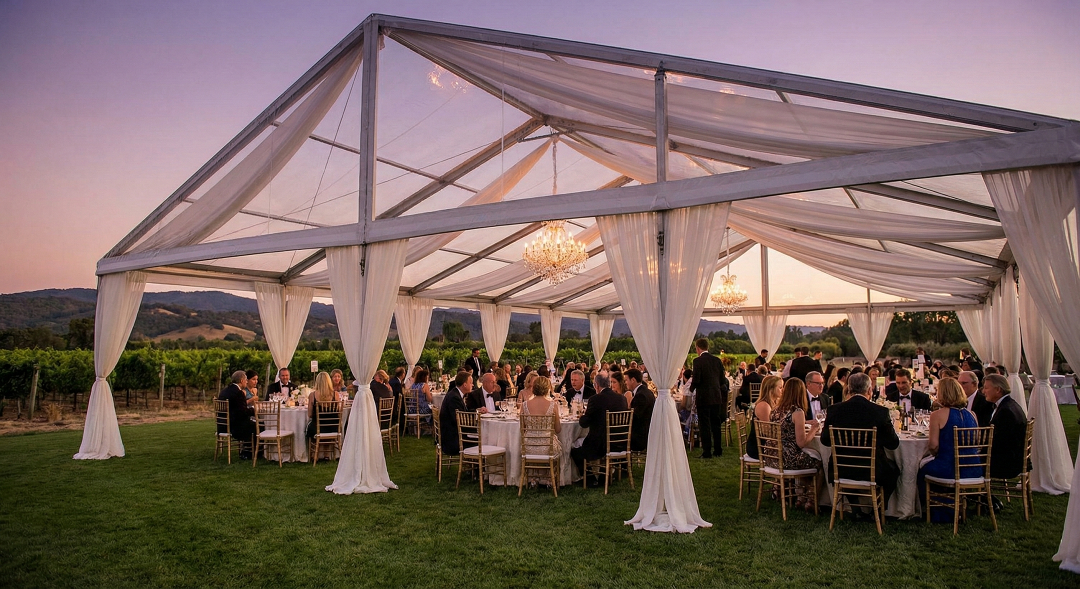
Event organisers who run a season of shows usually need a repeatable set of structures with consistent branding, lighting positions and flooring. A rental fleet can supply a season; a factory-direct order supplies a design that stays identical across seasons and can be re-skinned or extended rather than replaced.
Workshop and hangar applications
Workshop and aircraft-hangar uses demand wide clear spans with controlled access. These are engineering-led builds, where the wind and snow design, the anchoring plan and the door structure must be resolved before manufacture — a scope a dealer or rental operator does not own.
Comparison table: factory-direct vs. dealer vs. rental
| Decision dimension | Factory-direct (ODM) | Local dealer | Rental |
|---|---|---|---|
| Upfront cost structure | Manufacturer pricing without a reseller layer; MOQ starts at 1 unit, so the first order can be a single structure | Manufacturer price plus dealer handling and margin | No capital outlay; recurring fee per period, and no asset at the end |
| Customization freedom | Size and height, sidewalls and doors, colour and fabric, flooring, windows and curtains, insulation and ventilation, décor and lighting — set against site conditions and functional requirements | Limited to the configurations and fabric the dealer holds or orders | Limited to the rental fleet inventory |
| Deployment speed | 30–35 day production lead time; 90-unit monthly capacity supports phased rollouts | Immediate if the required configuration is in stock | Immediate if a suitable structure is available in the fleet |
| Long-term ownership value | Buyer holds an asset; 6061-T6 aluminum frames typically have a 15–20 year service life | Buyer holds an asset at a higher acquisition cost | No asset; value ends when the rental period ends |
| Engineering accountability | R&D center and engineering team provide custom design; 24/7 pre-sales and after-sales engineering support | Mediated through the dealer | Held by the fleet operator and not site-specific |
| Scalability for repeat projects | Modular 3 m / 5 m bay expansion; 3800+ units deployed globally; single production standard across sites | Dependent on dealer stock and re-order cycles | Capped by fleet availability |
| Commercial terms | T/T payment; FOB, CIF or CFR Incoterms; terms accommodated to the buyer's requirements | Local invoicing and payment terms | Rental contract terms |
| Suits | Multi-year ownership, customized configuration, repeat or scaled programs | Single unit, stock configuration, urgent local need | One-off events measured in days or weeks |
Read the table by ownership horizon. If the structure will still be standing in year three, the factory-direct column wins on both cost and control. If it will be gone in three weeks, the rental column wins on capital efficiency. The dealer column occupies a narrow band: fast, local, and unconfigurable.
Acceptance, inspection and risk-control checklist
Whichever route is chosen, the execution risk concentrates in three places: what the buyer agreed to accept, what was inspected before shipment, and how the structure is protected against its environment. Use the checklist below for a factory-direct order.
- Acceptance criteria agreed in writing before production: clear span, eave and ridge height, frame material and profile, fabric specification, door and window positions, flooring, insulation and ventilation scope, lighting provisions, anchoring method and full accessory list.
- Standardized pre-shipment quality inspection completed: frames, connectors, fabric panels, hardware and packing checked against the acceptance document before the container is closed.
- Flame-retardant fabric specified and documented: fire behaviour is a fabric-specification decision, and the documentation should travel with the shipment.
- Aluminum profiles designed for local wind and snow loads: project-specific targets — for example wind speeds up to 120 km/h and snow loads of 1.9 kN/m² — are set per site and confirmed in the engineering documents rather than assumed from a generic catalogue figure.
- Project-specific anchoring reinforcement defined: anchorage and foundation risk is site-dependent and should be resolved at the engineering stage.
- Regular inspection schedule in place: fabric, anchors and connections checked periodically through the life of the structure.
- On-site technical support available: installation guidance and 24/7 engineering support during commissioning and after handover.
- Contingency plan agreed: modular reinforcement solutions and global technical support for emergency situations.
- Commercial risk contained: MOQ of 1 unit for first orders, T/T payment, and a confirmed FOB, CIF or CFR basis before production is scheduled.
FAQ: sourcing an aluminum frame tent supply partner in China
1. What risk-control and compliance evidence should a long-term aluminum frame tent supply partner in China provide?
A long-term supply partner should be able to document how it manages climatic risk, fire risk, anchorage and foundation risk, and asset security. In practice that means evidence of flame-retardant fabric, aluminum profiles designed for the local wind and snow loads, project-specific anchoring reinforcement, a regular inspection regime and on-site technical support. Shoulder Tent addresses these through project-specific anchoring reinforcement, flame-retardant fabric, profiles designed for local wind and snow loads, regular inspections and on-site technical support, with contingency plans that include modular reinforcement solutions and global technical support for emergencies. Because wind and snow capability is span- and site-dependent, buyers should request the structural documentation that applies to their own project rather than accepting a general rating.
2. Can one Chinese manufacturer support repeat projects with different configurations?
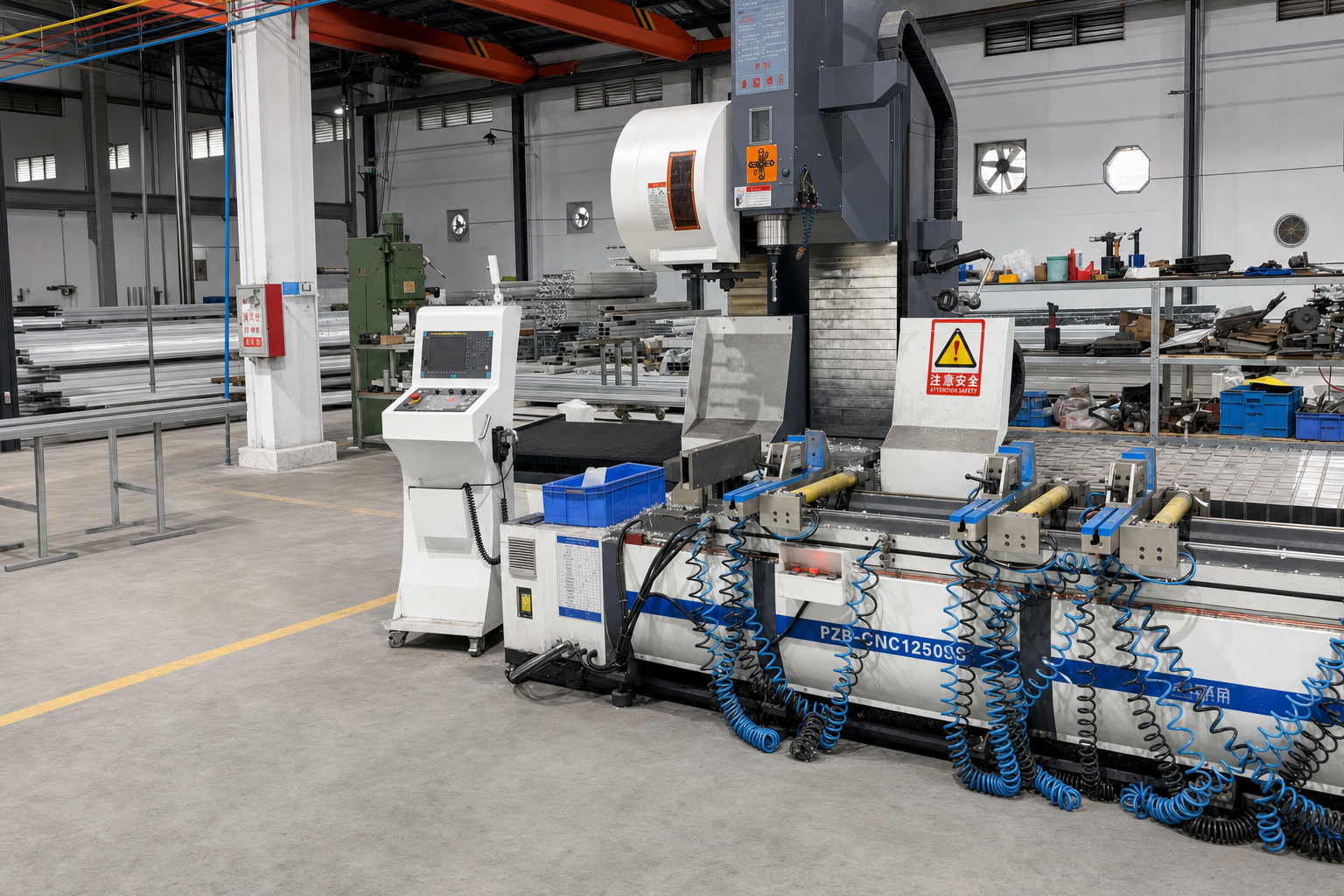
Yes, where the manufacturer owns both design and production. Shoulder Tent operates a 20,000 m² factory with 200 employees and an annual output of 1,000 units, and reports a monthly capacity of 90 units — enough to phase a multi-site rollout rather than treating each site as a new supplier search. Its R&D center and engineering team provide custom design and technical support, with customization based on site conditions, usage needs, dimensions and functional requirements. Product families cover A-Shape, Arc/Curved, APS hybrid, Dome/geodesic, Mixed/polygon/high-peak and Pagoda/Gazebo tents, and modular 3 m / 5 m bay expansion allows a structure to grow in defined increments.
3. What are the commercial terms when buying factory-direct instead of through a dealer?
Shoulder Tent quotes a minimum order quantity of 1 unit, so a buyer can start with a single structure and scale later. Payment is by T/T, and standard Incoterms are FOB, CIF and CFR. Payment terms can be adjusted to meet customer requirements, and the specific shipping method and Incoterms should be confirmed with the sales team before the order is placed. Compared with a dealer route, the buyer removes a reseller layer but takes on the import, inspection and installation-coordination tasks directly.
4. How can a buyer validate a factory-direct tent before committing to a larger program?
Validate with a real unit rather than a brochure. Because the MOQ starts at 1 unit, a buyer can order a single structure, agree written acceptance criteria before production, and require a standardized pre-shipment quality inspection against those criteria. That first unit then serves as the reference build: the same span, frame material, fabric specification, anchoring method and accessory set can be repeated across later sites. Buyers should also confirm the flame-retardant fabric documentation and the wind and snow design basis at this stage, since both are difficult to retrofit later.
5. What lead time should a buyer plan for, and does it hold for repeat orders?
Shoulder Tent quotes a production lead time of 30–35 days, with a monthly capacity of 90 units and 24/7 pre-sales and after-sales engineering support across the order cycle. For a single structure, that lead time sets the installation window. For a repeat or scaled program, the monthly capacity figure is the more useful planning number, because it determines how many structures can be released per month without queuing behind other orders. Buyers planning a phased rollout should book capacity against that figure rather than against a per-order assumption.
Conclusion: choose the route that matches the ownership horizon
The factory-direct, dealer and rental routes are not three prices for one product. They are three different commercial models for three different ownership horizons. Rental is the efficient answer when the requirement is measured in days. A dealer is the efficient answer when a single stock unit is needed immediately and no engineering change is acceptable. Factory-direct ODM is the efficient answer when the structure will be owned for years, when the configuration must match the site, or when the same design has to be repeated across several locations — because that is the only route where the engineering brief, the production standard and the cost base all sit in one place.
The decision matrix in this guide reduces to four checks: how long the structure will stand, how much of the specification must change, how many units will follow, and who is accountable for the wind and snow design. Once those are answered, the route is no longer ambiguous.
Next step: quote, sample unit or catalogue
Shoulder Tent supplies aluminum frame tents direct from its factory with an MOQ of 1 unit, a 30–35 day lead time and a monthly capacity of 90 units, under T/T payment with FOB, CIF or CFR terms.
Send your span, site location and application to info@shouldertent.com or WhatsApp +86 158 1850 8822 to request a quote or discuss a first unit. The full product and capability overview is available in the Shoulder Tent catalogue (PDF).
Website: www.shouldertent.com | Management Center: No. 4703B, West Tower, Galaxy Twin Towers, Shenzhen, China | Marketing Center: Room 1508, South Tower, Guangzhou World Trade Center Complex, China
Have Questions or Need More Details?
Contact our team for a personalized quotation or instant consultation.
Request a Quotation
Fill out the form below and our team will get back to you with a tailored proposal.
WhatsApp Direct Chat
Prefer to chat in real-time? Message us on WhatsApp for instant assistance & quick answers.
- Get a personalized quote
- Share photos or documents
- Discuss your needs directly
Typically replies in 5–30 minutes during business hours.