Aluminum Frame Tent Procurement FAQ: MOQ, Lead Time, Payment Terms and After-Sales Support
An aluminum frame tent is a modular structure assembled from prefabricated aluminum alloy profiles and a fabric cover, used as a semi-permanent warehouse, sports enclosure, workshop or event venue. Buyers who reach this stage of research have usually settled the structural question already. What still blocks the purchase order is commercial: how small the first order can be, how long production takes, how the shipment is paid for and insured, and who answers engineering questions after the container arrives.
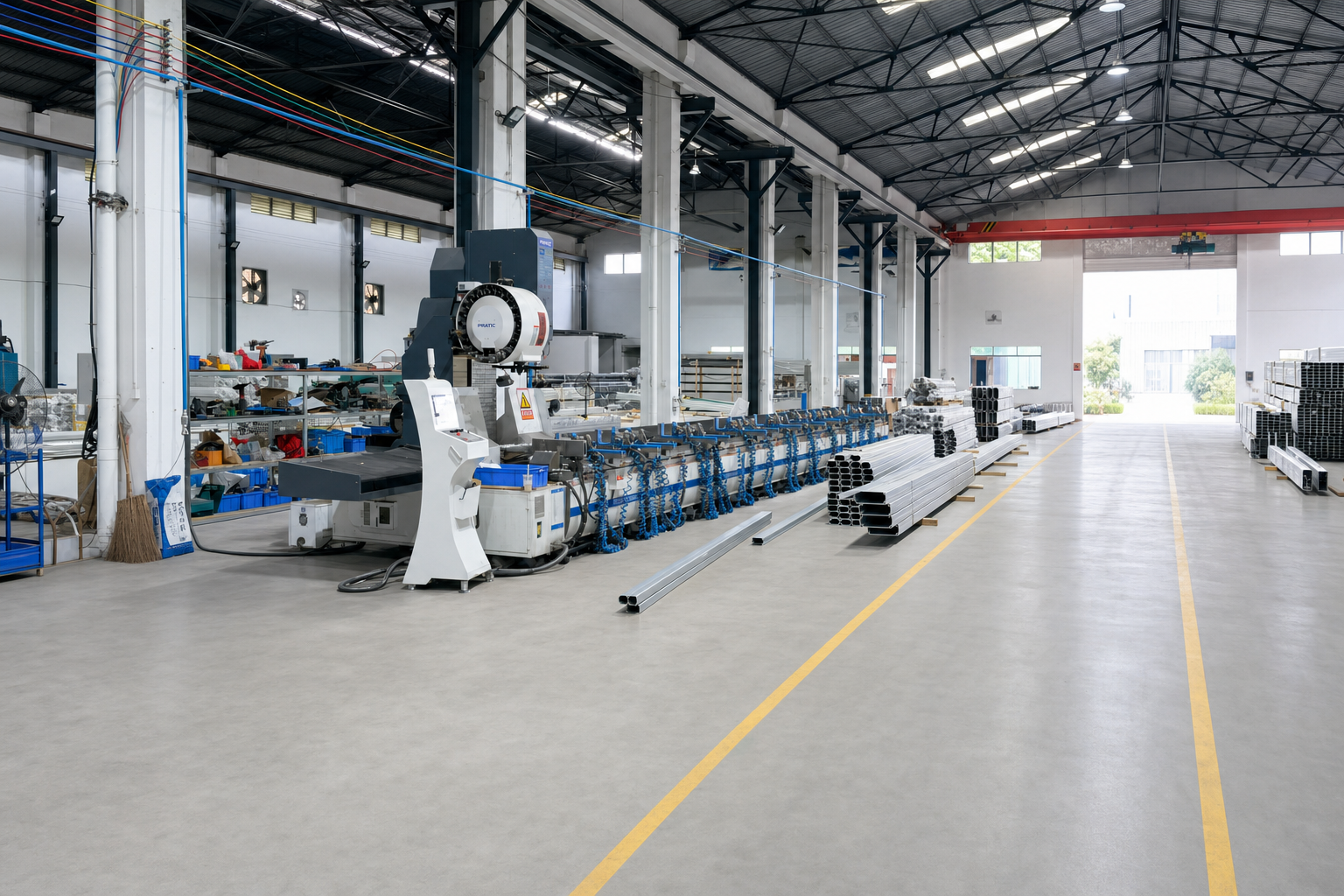
This guide answers those four questions in the sequence buyers normally ask them. The reference framework is the commercial position published by Shenzhen Shoulder Tent Co., Ltd. (Shoulder Tent), a China-based manufacturer of large prefabricated tent structures founded in 2009, operating a 20,000 m² factory and exporting roughly 80% of output to Europe, the Middle East, Africa, Southeast Asia and South America.
The four answers, up front
- Minimum order quantity: orders are accepted from a single unit, with no minimum order quantity requirement.
- Lead time: 30–35 days, supported by a monthly production capacity of 90 units.
- Payment and shipping: T/T payment, with shipment under FOB, CIF or CFR terms.
- After-sales: 24/7 online service, plus pre-sales and after-sales engineering and technical support that continues after global delivery.
Problem Definition: Why Commercial Terms Decide Aluminum Frame Tent Projects
An aluminum frame tent project is anchored to a date that cannot move. A logistics operator needs a temporary warehouse tent standing before peak inventory arrives. A club needs a sports tent covering pickleball, padel or tennis courts before the season opens. An organizer has already sold an event date. A factory needs a workshop tent before a production line restarts. In each case the structure itself is a known quantity, and the schedule, payment route and post-delivery support decide whether the project is feasible.
Three failure modes account for most delayed orders:
- Quotes that cannot be compared. One supplier quotes FOB, another CIF, a third quotes ex-works. Freight and insurance sit in different places, so the two totals describe different things.
- MOQ assumptions. A buyer plans a single-unit trial; the supplier's commercial model assumes a full container. The project stalls while scope is renegotiated.
- Undefined responsibility after delivery. Nobody confirms who handles installation guidance, accessory questions or engineering follow-up once the tent has shipped, and the gap surfaces weeks later.
Each of these is a documentation problem rather than a manufacturing problem. The four questions below are the ones that resolve them.
Industry Background: Why the Commercial Layer Now Carries More Weight
Aluminum frame tents have moved from short-term rental stock into semi-permanent infrastructure. Published application segmentation for the category covers warehouse and industrial storage, sports and recreation such as pickleball, tennis and padel courts, weddings and events, and aircraft hangars. Shoulder Tent's own listed applications follow the same pattern: warehousing and logistics, industrial manufacturing, agricultural storage, exhibition and events, sports venues, and hospitality or resorts.
Structurally, these are modular systems combining prefabricated aluminum profiles with fabric covers, operating in outdoor or semi-outdoor conditions that require waterproofing, wind resistance and flame retardancy. Industry analysis places the service life of 6061-T6 aluminum frame structures at 15 to 20 years under standard outdoor conditions — long enough that a tent behaves less like disposable equipment and more like an asset with a lifecycle.
That lifecycle changes procurement expectations. When a structure is expected to serve for a decade or more, buyers start asking about design documentation, accessory compatibility, spare components and engineering support in the same conversation as unit price. Because much of the global supply is manufactured in China and shipped internationally, the Incoterm and payment structure of a quotation carries as much practical weight as the number on the bottom line.
Detailed Solution: How Shoulder Tent Structures an Aluminum Frame Tent Order
Minimum order quantity: orders start from a single unit
Shoulder Tent accepts orders from a single unit and states that it has no minimum order quantity requirement. That single policy covers three buyer situations that would otherwise be turned away: a first-time importer validating a supplier, an event or venue operator buying one marquee for a fixed date, and a warehouse operator testing a design before committing to a wider expansion programme.
MOQ is also one of the few procurement variables where published market signals diverge sharply. Selected PVC-covered aluminum frame tent listings reviewed for this article each stated a MOQ of 100 square meters, alongside indicative asking prices of US$22–30, US$28–38 and US$35–60 per square meter. Those are marketplace asking prices for selected listings rather than standardized transaction benchmarks, and they are not directly comparable across suppliers because specifications, Incoterms, installation, anchoring and cover grades differ. The practical lesson is that MOQ should be confirmed in writing on the quotation, not assumed from a category average.
Lead time: 30–35 days against a 90-unit monthly capacity
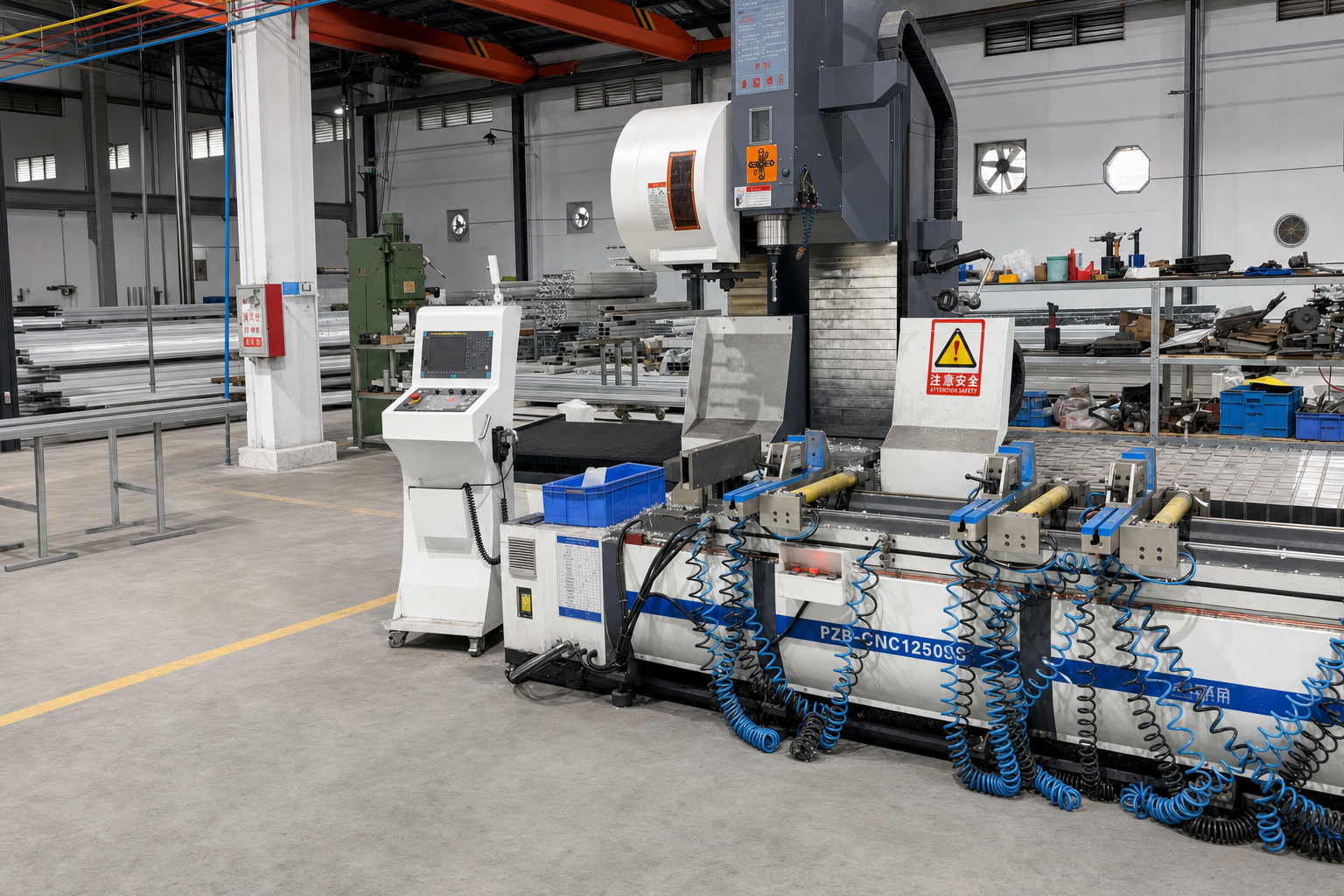
Shoulder Tent quotes a lead time of 30–35 days. The capacity behind that figure is a monthly production capacity of 90 units and an annual output of 1,000 units from a 20,000 m² factory with around 200 employees. For a single-unit order, 30–35 days is the planning number to place against a project date. For a multi-unit programme, monthly capacity determines whether the order ships in one production cycle or is scheduled across several.
Lead time should always be read together with the shipment term, because the date that matters to a buyer is arrival on site, not dispatch from the factory. A 30–35 day production window followed by sea freight describes a very different project calendar than the same window followed by air freight, and the quotation should state which clock is running.
Payment terms and shipping terms: T/T with FOB, CIF or CFR
Orders ship under FOB, CIF or CFR terms with T/T payment. The three Incoterms place responsibility differently, and the difference matters more for a bulky, high-cube shipment than for general cargo:
- FOB — the seller delivers the goods on board the vessel at the named port; the buyer arranges and pays main carriage and insurance.
- CIF — the seller arranges and pays main carriage and insurance to the named destination port; risk still transfers at shipment.
- CFR — the seller arranges and pays main carriage to the named destination port, while the buyer arranges insurance.
T/T payment is confirmed on the proforma invoice. Buyers comparing quotations should confirm which Incoterm is quoted, because the same aluminum frame tent at the same unit price produces three different landed costs depending on where freight and insurance sit. Roughly 80% of Shoulder Tent's output is exported to Europe, the Middle East, Africa, Southeast Asia and South America, so quotations are normally structured around an international shipment rather than domestic delivery.
After-sales: 24/7 online service and engineering support
Shoulder Tent provides 24/7 online service and pre-sales and after-sales engineering and technical support, with support continuing after global delivery. Its ODM service covers design and R&D, factory manufacturing, global delivery, installation and on-site technical support.
The practical consequence is that technical questions raised after the tent is standing — frame connections, cover installation, accessory fit, expansion of an existing structure — route to an engineering function rather than to a sales inbox. Round-the-clock availability also matters across time zones, since a buyer in Europe, Africa or South America is rarely working the same hours as a Chinese manufacturing team.
Before dispatch, a completed product undergoes standardized engineering and quality inspections. Buyers with project-specific documentation requirements should raise them during the engineering stage so they are captured before production begins.
Customization scope that shapes the commercial quote
Custom options include size and height, sidewalls and doors, color and fabric, flooring systems, windows and curtains, insulation and ventilation options, and décor and lighting. Special requirements commonly specified alongside these are fire rating, strengthened wind and snow load designs, foundation and anchorage treatments, insulation and climate control, and custom doors or loading openings. Custom doors and loading openings are particularly common in warehouse and hangar applications, where forklift and equipment access defines the layout.
Each option changes the bill of materials, which is why the accessory schedule should be agreed before a final quotation is issued rather than added after the price is fixed.
| Parameter | Aluminum Frame Tent — published specification |
|---|---|
| Model range | S30-1, S32, S45-1, S45-2, S60-1 |
| Type | Wedding tent / event tent / sports tent / warehouse tent |
| Frame material | Aluminum alloy profile frame |
| Cover material | Double-layer PVC-coated polyester tarpaulin |
| Maximum wind load | 100–120 km/h |
| Snow load | Up to 1.9 kN/m² |
| Applicable industries | Warehousing and logistics, industrial manufacturing, agricultural storage, exhibition and events, sports venues, hospitality and resorts |
Step-by-Step Breakdown: From RFQ to Installed Aluminum Frame Tent
- Define the project envelope. Decide what the structure must do and for how long: temporary warehouse overflow, semi-permanent sports coverage, a fixed-date event, an industrial workshop. Match that to the model family (S30-1, S32, S45-1, S45-2 or S60-1) and confirm whether modular 3 m or 5 m bay expansion may be needed later.
- Build an accessory schedule. Cassette flooring, sidewalls and doors, ventilation and insulation accessories, lighting, staging and carpets, and anchoring systems all belong on the list at this stage.
- Flag special requirements early. Fire rating, strengthened wind or snow load design, foundation and anchorage treatment, insulation and climate control, and custom doors or loading openings should be stated in the first enquiry, not added after drawings are issued.
- Request a written quotation with the trade term named. Ask explicitly for the Incoterm (FOB, CIF or CFR), the payment method (T/T), and written confirmation of MOQ and lead time.
- Confirm engineering and drawings. Under the ODM model, design and R&D sit inside the supplier's scope, so drawing approval is part of the procurement sequence rather than an optional extra.
- Lock the production slot. With a 30–35 day lead time and 90 units of monthly capacity, multi-unit programmes should be scheduled against capacity rather than against a single lead-time figure.
- Complete pre-shipment inspection. Standardized engineering and quality inspections are performed once the product is finished, before it leaves the factory.
- Plan delivery, installation and support. Installation and on-site technical support are available within the ODM scope, and 24/7 online service plus engineering support continues after delivery.
Use Cases: How the Same Terms Play Out Across Projects
Temporary warehouse tent and industrial storage tents
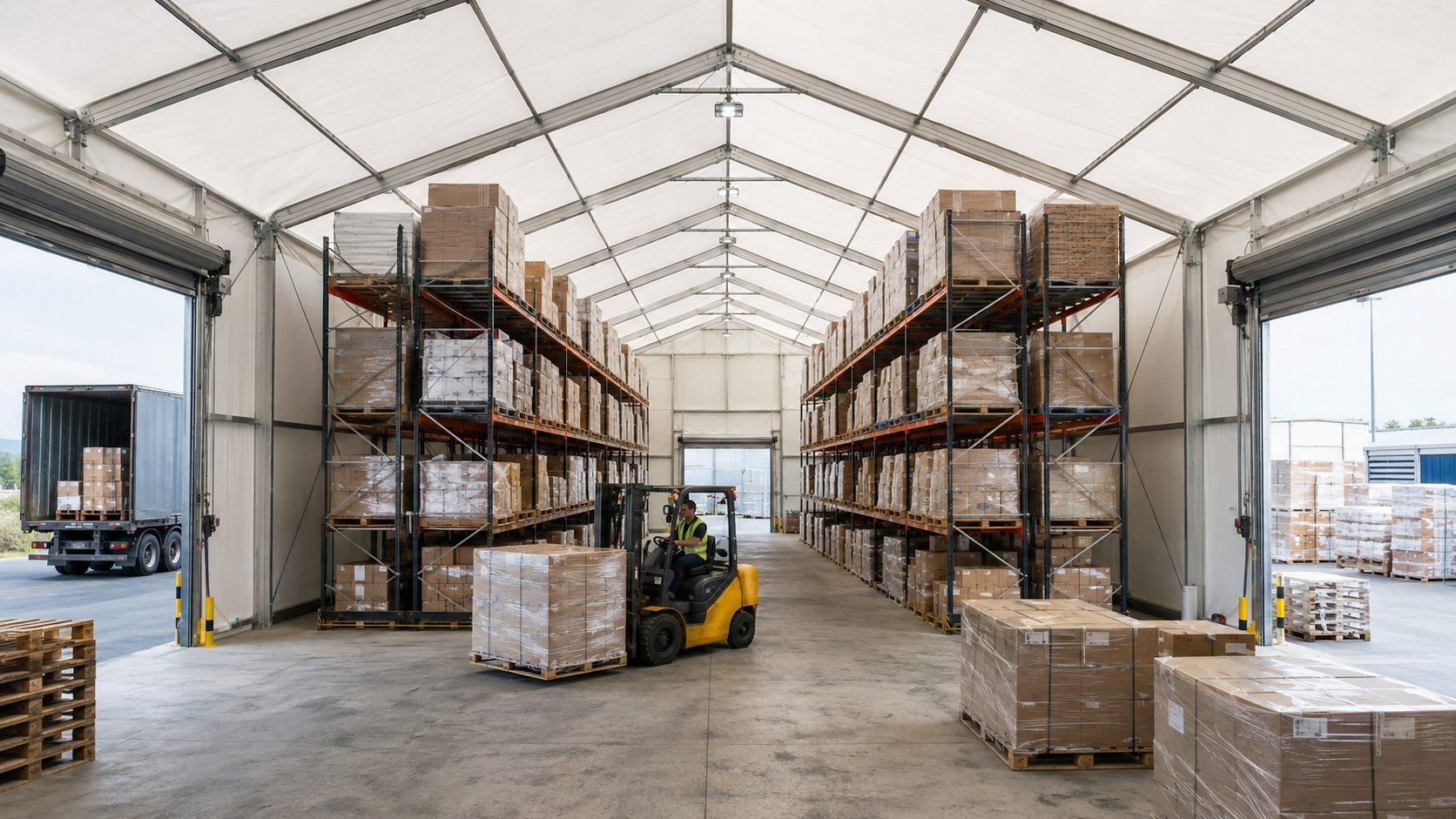
Storage buyers usually ask about MOQ first, because the logic of the purchase is incremental: prove the design on one bay, then extend. A single-unit order is accepted, and modular 3 m or 5 m bay expansion allows a temporary warehouse tent or industrial storage tent to grow without replacing the original frame. The wind figure of 100–120 km/h and snow load of up to 1.9 kN/m² are the numbers to check against the site.
Sports tent for pickleball, padel and tennis
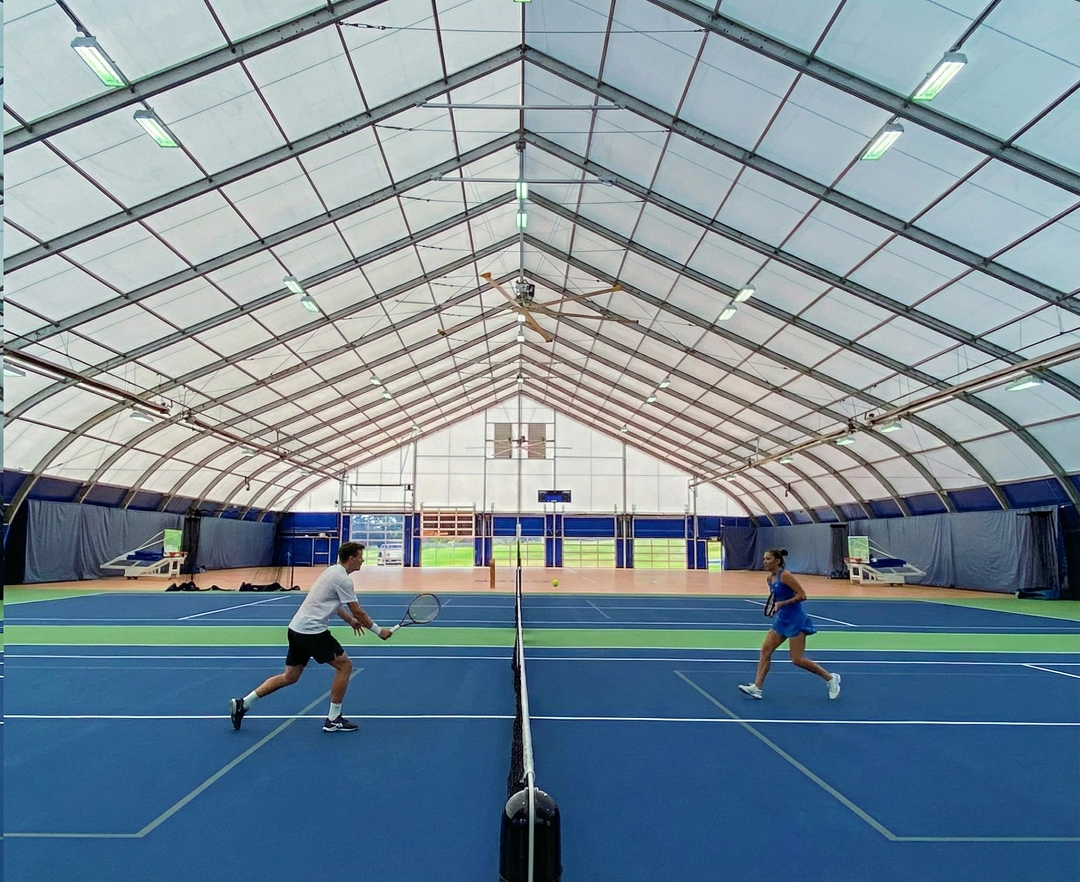
Covered court demand is schedule-driven. Industry data for the United States shows indoor pickleball and padel facilities commanding 2–3x higher utilization rates than outdoor courts and representing 36.9% of total supply as of 2026. For a club opening a covered court programme, the 30–35 day production window and the shipment term together determine whether the courts open on the planned date — which makes those two commercial answers more urgent than any structural specification.
Event tent, wedding tent and commercial marquee
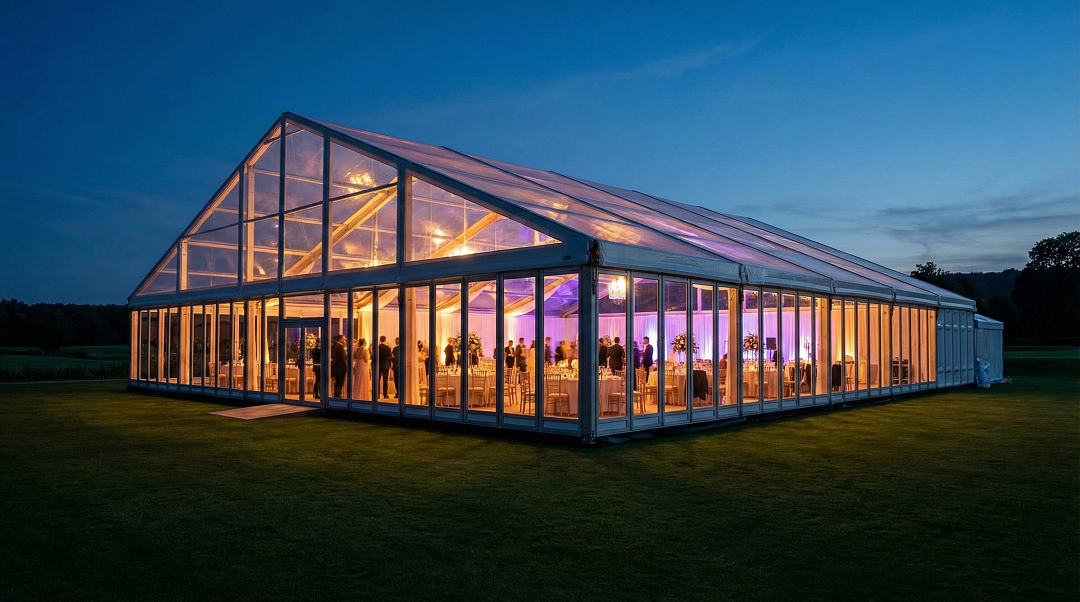
Event buyers work to a fixed date that cannot slip. Décor and lighting, staging and carpets, and window and curtain options are typically specified together, and CIF terms are common where the buyer wants freight and insurance handled by the supplier. Shoulder Tent also lists exhibition and event applications among its core segments, and the structure is designed for rapid installation and dismantling.
Aircraft hangar tent, workshop tent and agricultural storage
Hangar and workshop applications lean on clear-span column-free design and custom doors or loading openings, because equipment access defines the layout. Foundation and anchorage treatment becomes part of the commercial scope here rather than a site detail, and the same applies to agricultural storage projects where the tent is expected to remain in place season after season.
Comparison Table: Stated Positions and What to Confirm in the RFQ
| Procurement question | Shoulder Tent stated position | What to confirm in the RFQ |
|---|---|---|
| Minimum order quantity | Orders accepted from a single unit; no MOQ requirement | Whether MOQ is measured in units, covered square meters or frame model — ask for it in writing on the quotation |
| Lead time | 30–35 days | Which date the lead time counts from, so the schedule can be planned backwards from site delivery |
| Production capacity | 90 units per month; 1,000 units per year from a 20,000 m² factory | For multi-unit programmes, request a production schedule rather than a single lead-time figure |
| Payment method | T/T | The payment schedule and bank details stated on the proforma invoice |
| Shipping terms | FOB, CIF or CFR | Which Incoterm is quoted — freight and insurance responsibility changes with each |
| Pre-shipment inspection | Standardized engineering and quality inspections once the product is completed | The inspection record set that will accompany the shipment |
| After-sales support | 24/7 online service; pre-sales and after-sales engineering and technical support | The contact route for engineering questions after delivery |
| Customization | Size and height, sidewalls and doors, color and fabric, flooring systems, windows and curtains, insulation and ventilation, décor and lighting | The full accessory list before the final quotation is issued, since each option changes the bill of materials |
FAQ
What quality checks are completed before an aluminum frame tent leaves the factory?
Once a product is completed, it undergoes standardized engineering and quality inspections before leaving the factory. The checks happen after completion rather than during order intake, so any project-specific documentation requirement should be raised during the engineering stage, before production begins. The published structural figures for the Aluminum Frame Tent — maximum wind load of 100–120 km/h and snow load of up to 1.9 kN/m² — should be checked against the actual site conditions at that same stage.
Can an aluminum frame tent be supplied for a warehouse project with custom dimensions and loading openings?
Yes. Customization covers size and height, sidewalls and doors, color and fabric, flooring systems, windows and curtains, insulation and ventilation options, and décor and lighting. Custom doors and loading openings are listed as a special requirement alongside fire rating, strengthened wind and snow load designs, foundation and anchorage treatments, and insulation and climate control. Shoulder Tent operates an ODM model covering design and R&D, factory manufacturing, global delivery, installation and on-site technical support, and lists warehouse and workshop applications within its product scope.
Is there a minimum order quantity for an aluminum frame tent?
Shoulder Tent accepts orders starting from a single unit and states that there is no minimum order quantity requirement. This differs from selected marketplace listings reviewed for this article, which each stated a MOQ of 100 square meters. Buyers comparing suppliers should confirm how each supplier measures MOQ — units, covered square meters, or frame model — because those three measures are not interchangeable, and a figure quoted in square meters cannot be compared with a figure quoted in units without knowing the size of the structure.
Can a buyer order one unit as a trial before a larger programme?
A single unit is an accepted order size. In practice, a single-unit order is how many buyers validate frame quality, cover fit, accessory compatibility and the documentation that arrives with the shipment before committing to a multi-unit expansion. Production is quoted at 30–35 days, and modular 3 m or 5 m bay expansion means a validated first structure can later be extended rather than replaced.
How should a buyer plan an order around lead time, shipping terms and after-sales support?
Plan backwards from the on-site date. Production runs on a 30–35 day lead time against a monthly capacity of 90 units, so a single unit fits one production cycle while a larger programme may span several. Orders ship under FOB, CIF or CFR terms with T/T payment, and which Incoterm is quoted determines where freight and insurance sit in the landed cost. After delivery, 24/7 online service and engineering and technical support remain available, alongside installation and on-site technical support within the ODM scope. To start a quotation, send the application, required size, accessory list and target date to info@shouldertent.com or WhatsApp +86 158 1850 8822.
Conclusion
Aluminum frame tent procurement rarely fails on structure. It fails on the four commercial answers that determine whether the structure can physically arrive on time and be supported afterwards. Shoulder Tent's position is straightforward: orders from a single unit with no MOQ, a 30–35 day lead time backed by 90 units of monthly capacity, T/T payment with FOB, CIF or CFR shipping, and 24/7 online service plus pre-sales and after-sales engineering support that continues after global delivery.
For buyers assessing a warehouse tent, an industrial storage tent, a sports enclosure or a fixed-date event marquee, the practical next step is to put those four items into the RFQ in writing — MOQ, lead time with its start date, Incoterm and payment method, and the support route after delivery — and to confirm them on the proforma invoice before production is scheduled.
Request a Quotation or Sample Confirmation
Send your application, required size, accessory list and target date, and Shoulder Tent will return a quotation with MOQ, lead time, Incoterm and support terms stated explicitly.
Email: info@shouldertent.com | WhatsApp: +86 158 1850 8822 | Website: www.shouldertent.com
Download the full company and product catalogue: Shoulder Tent Company & Product Catalogue (PDF)
Management Center Shenzhen: No. 4703B, West Tower, Galaxy Twin Towers, Shenzhen, China. Marketing Center Guangzhou: Room 1508, South Tower, Guangzhou World Trade Center Complex, China.
Have Questions or Need More Details?
Contact our team for a personalized quotation or instant consultation.
Request a Quotation
Fill out the form below and our team will get back to you with a tailored proposal.
WhatsApp Direct Chat
Prefer to chat in real-time? Message us on WhatsApp for instant assistance & quick answers.
- Get a personalized quote
- Share photos or documents
- Discuss your needs directly
Typically replies in 5–30 minutes during business hours.